Monday, June 9, 2014

Lighthouses Re-Visited: Fairport Harbor Lighthouse


           Author's Note--In the coming months, I will reprint a number of lighthouse history articles I've written over the years for magazines, newspapers, and journals. These reprints will be titled "Lighthouses Re-Visited." They're a chance for me to go back and see what's static and what's new. I like the idea of providing the public with the information contained in these old articles--especially young readers and people just becoming interested in lighthouses--and I'm glad to give additional exposure to the lighthouses that were detailed in the articles. Unlike books, periodicals seldom extend the life of a piece of writing beyond the initial printing. Sometimes, my articles have been reincarnated in new places as reprints, but more often than not they simply "flash" in one issue and then appear no more. Of course, if researchers want to dig in libraries and archives, they'll find them. Why not make finding them easier, I say, by posting reprints on my blog? I'm a writer who is transitioning from hard print to e-print, and this will be one of my transition projects.
 
I hope you enjoy re-visiting these lighthouse articles with me. Look for my notes in each article, usually with new information or commentary, and look for updates too. Please add your thoughts and any new information you feel is relevant. I hope to develop some conversation about the lighthouses featured, so comments and images are much-appreciated.
 
And now I have to add a word of caution. It's so easy for copyrighted materials to be "appropriated" elsewhere now that the Internet is alive and well. Enjoy this article and join the dialog about it, but please be considerate of my rights as the author. The following article, both the narrative and images--about Ohio's Fairport Harbor Lighthouse is ©Elinor DeWire and may not be reprinted or excerpted or images used for any other use without permission from me. The U.S. Lighthouse Society honored me with the first rights printing of the article. I own all subsequent rights. If you're thinking of reprinting this article or using it for any other purpose, contact me first at lightkeeper0803@gmail.com. Thanks!
 
The following article was originally published  in the Winter 2009 issue of the U.S. Lighthouse Society journal, The Keepers Log.
 
                                        *                    *                      *                      *                      *
 
Fairport Harbor Lighthouse: The Freedom Light


Lighthouses are responsible for saving lives and property, but this is the story of a lighthouse that went beyond the obligatory rescue of ships and crews, passengers and cargo. For nearly four decades, it was a beacon of hope for a despised, abused, and desperate faction of society. Fairport Harbor Light was a critical stop on the Underground Railroad that brought black slaves to freedom in Canada. And many years later, when its light was no longer needed, the lighthouse itself was saved by a group of insightful citizens who recognized its unique contributions to the American story.

            The history of Fairport Harbor Lighthouse reads like a good novel, with all the drama, colorful characters, and mixture of emotions we’d expect in a best-selling book. It has a happy ending too, and today we can safely say it’s living “happily ever after.” But to appreciate the way things turned out, we must journey back to the early 1800s, when Ohio had just gained statehood and throngs of hopeful pioneers, dogged by confident speculators and opportunists, were pouring into the new state. The converging masses needed a guiding light to see them safely into their futures. Fairport Harbor Lighthouse—stalwart, dependable, and resilient—was a model of Midwest mettle.

            It all began when a sheltered lake-harbor feeding into a pliable river in northeast Ohio was dubbed the Gateway to the Western Reserve. The fertile tract of Lake Erie shorefront, some 120-miles long, was purchased by the Connecticut Land Company in hopes that droves of homesteaders from crowded eastern states would use it as a staging point for westward migration. No decent wagon roads had been cut across the wilderness of western New York and Pennsylvania in the early 1800s, so getting to Ohio was a challenge. A few of the more intrepid pioneers came in the winter months on heavy, ox-drawn sleighs, with the wind howling up their sleeves and the surface of Lake Erie like frosted glass. Most settlers came by water, however, traveling the rivers and making portage where necessary to reach the lake. From there, they boarded ships bound for the Western Reserve.

            They were attracted to the land for the same reasons the great Iroquois tribes had migrated there centuries before: O-he-yo was rich and arable, and there was bountiful fish and game. It was “the place of the beautiful river,” a wide-open frontier waiting to be mastered. By the time settlers began putting down roots, most of the Iroquois had moved further north and west, but their liquid language still echoed in the names of many twisting rivers feeding and siphoning Lake Erie—Cuyahoga, Chippewa, Mohican, Huron, Tuscarawas, and even the "beautiful river" itself, the Ohio.

            It was the French who named the river and the harbor over which Fairport Lighthouse would someday shine. Trappers had found a profitable trade here with the Indians and called the handsome estuary "La Grande Riviere." The Connecticut Land Company must have thought it a suitable name too, for they translated it into the English "Grand River" and dubbed the tiny settlement "Grandon." About 1818 a traveler named William Darby passed through Grandon and left a simple description of the river in his journal: "Grand River is a stream of some consequence...about 70-yards wide at the mouth, with a 7-foot water on the bar near the entrance to the lake. The east bank rises to a height of 30 or 40 feet according a very handsome site a village. The harbor is excellent for such vessels whose whole draft of water will admit entrance. Preparations are making to form wharves...to afford a harbor to vessels of any draft."

            Steamboat traffic into the Grand River increased considerably in the early years after settlement. By 1825, when the population of Grandon had grown to about 300 and steamboat navigation was in full swing on Lake Erie, the harbor's future looked bright indeed. Citizens abandoned the name Grandon and proudly announced their town's new name would be "Fairport," a moniker sure to attract hardworking folks from back east. Soon, there was so much activity in the harbor it seemed sensible to build a lighthouse on the bluff overlooking the estuary. The March 26, 1825 issue of the Painesville Telegraph carried a notice asking for bids on the proposed lighthouse and keeper's quarters:

The Light-House to be built of stone or hard brick, the form round. The foundation to be sunk three feet; or as deep as may be necessary to make fabric secure; to be laid in good lime mortar. The heighth [sic] of the tower to be thirty feet from the surface of the ground. The diameter of the base to be eighteen feet; and that of the top nine feet. The thickness of the walls at the base to be three feet, and to be uniformly graduated to twenty inches at the top. The top to be arched, on which is to be laid a deck of soapstone, eleven feet in diameter, four inches thick, the joints to be filled in with lead, on one of side of which is to be a scuttle to enter the lantern; the scuttle door to be an iron frame covered with copper. The outside to be well-pointed with Roman cement and whitewashed twice over….


            And so it went for many pages, with the Collector of Customs at Cleveland, A.W. Wadsworth, describing the structure and its adjacent dwelling in great detail. A separate bid allowed for the fitting up of the lantern with “patent lamps and reflectors, tin butts for keeping the oil, and all the necessary apparatus, in the same manner as the light-houses of the United States have been fitted up by Mr. Winslow Lewis.” The actual contract for construction was also comprehensive. It was signed on June 16, 1825.

            Jonathan Goldsmith, a Connecticut native who had moved to Painesville, Ohio in 1811, won the construction bid for $2,900. He completed the tower and keeper's house in the fall of 1825 but soon became embroiled in a dispute over the cellar beneath the keeper's house, which he claimed was not included in the plans he had been given. He submitted an exorbitant bid for the addition of the cellar. Since Wadsworth was ill at the time, and the expense of hiring another contractor was prohibitive, he had no alternative other than to accept Goldsmith's high price. This brought the total bill for the project to $5,032—almost twice Goldsmith's original bid. Wadsworth did manage to get Goldsmith to build a cheap fence around the station as part of the price.

            Though a respected Western Reserve architect, Goldsmith's work came into question within a decade of completion of the lighthouse and quarters. The foundation of the tower settled so much it became necessary to replace it in a costly and time-consuming project in 1835. An ironic turn of events occurred six years later when Goldsmith applied for the position of lightkeeper. Political patronage was commonplace at the time, and a naval officer friend of Goldsmith’s pressured for his appointment. Goldsmith was denied when his application fell into the hands of Congressman Joshua Giddings, a public servant far ahead of his time. Giddings responded:

I have laid down a rule for my own guidance from which I do not like to depart. That is to lay all papers on the subject of appointments before the proper officers, and if inquired as to character of the applicant or those who sign his application, frankly to state all I know upon the subject and then leave the matter to rest and place the responsibility upon the officer making the appointment.

            The position was given to a local man named Samuel Butler, the first of seventeen keepers—principals and assistants—to serve at Fairport Lighthouse. All men, they staffed the station during the active shipping season on Lake Erie, from April through December, and then extinguished the light during the winter when the lake was frozen and no shipping could move. Most took other jobs in winter, such as cutting ice or logging. One is rumored to have been an itinerant preacher who plied the local pulpits when Lake Erie turned hard as stone.

            Samuel Butler was a staunch abolitionist who gave the lighthouse its nickname, “Freedom Light.” He converted the cellar of the lighthouse into a refuge for runaway slaves, making it a valuable link in the famous Underground Railroad. “Follow the Drinking Gourd to Freedom Light” became the mantra of many runaways, who used the stars of the Big Dipper to find their way north to Fairport Harbor and then the beam of the lighthouse to find refuge. Parmley Mansion, near the lighthouse, had a spacious walled-off cellar with a tunnel leading down to Lake Erie. Slaves came to the lighthouse in darkness and were concealed in the dwelling basement. When the time was right, they were moved to Parmley Mansion to await a ship for Canada. Schooners in the business of moving runaway slaves dropped anchor off the lighthouse and signaled to the mansion when they were ready for passengers. The mansion then signaled back, telling how many slaves were moving and when they would send them. This covert practice continued off and on through the tenures of several more lightkeepers, right up to 1869 when the old lighthouse was demolished. It’s estimated that upwards of five-hundred escaped slaves used Fairport Light to gain their freedom.

            In the meantime, the town of Fairport had grown considerably. Pierheads were built in the 1820s to guide shipping into the harbor and protect it from storm winds. A beacon was placed on the east pierhead in 1834. A report to the Secretary of the Treasury by naval Lieutenant C.T. Platt in 1838 described it: “The beacon on the east pier forming the harbor is lighted with four lamps and is in perfect order. This pier extends six hundred feet into the lake; the west pier nine hundred feet. By bringing the lighthouse and beacon in range, incoming from the west, there is no difficulty in entering the harbor.”


            The West Pierhead Light was a truncated wooden skeleton tower with a small, exposed lens-lantern on its top. The East Pierhead Light was constructed a few years later, a hexagonal wooden tower with a lantern enclosing a lens-lantern. These towers were rebuilt in later years as the piers were enlarged and extended.

            Fairport served as a fueling station and supply harbor for vessels headed to other ports on the lakes. Many of the ships carried pioneers and all their earthly belongings and supplies west to new lands beyond the reserve. Everything from oil of peppermint to upright pianos, from livestock to lumber, sailed into the harbor and passed under the scrutiny of the lighthouse keepers, whose job included keeping records of incoming and outgoing marine traffic and collecting wharf fees. In 1847 alone, during the service of keeper Isaac Spear, 2,987 vessels entered Fairport Harbor with cargoes valued at almost a million dollars.
 
(Photo from Kraig Anderson, www.lighthousefriends.com)
 

            By the time the Civil War began, the lighthouse was in terrible condition and its archaic lamp apparatus lagged far behind the advanced technology that had been adopted by the Lighthouse Board—the Fresnel lens. An 1868 inspection revealed that one of the iron bands supporting the tower had snapped, and the keeper's dwelling was dilapidated. The tower was braced to stand through the winter of 1868-69 while plans were made for a new lighthouse. A temporary beacon was erected and lit in the winter of 1869 so that the old tower could be dismantled.

            With an appropriation of $30,000, work began on the new Fairport Harbor Lighthouse on April 4, 1870. Rather than repeat the same mistake Goldsmith had made with the old foundation, contractors for the new structure prepared an elaborate crib some 12-feet deep, with piles encased in concrete and a grillage of 12-inch timbers. The gray Berea sandstone tower was built on top of this sturdy base and completed up to its twenty-ninth course when work was halted due to suspension of funds. Post Civil War spending had nearly depleted the U.S. Treasury, and other more critical projects took precedence. An unpainted board cover protected the tower during the interim period, but the exposed skeleton of the keeper's house began to deteriorate almost immediately under the constant pummeling of Lake Erie wind and rain.

            In the spring of 1871 when work resumed, an additional $10,000 was required to rebuild the house. On August 11, 1871 a light shone in the new tower for the first time, produced by lard oil lamps positioned inside a glistening fixed third-order fixed Fresnel lens. The new illuminating apparatus, with its hundreds of prisms and huge convex belt of focusing glass, was encased in a handsome brass framework and pedestal. The entire mechanism weighed about a ton. Keeping this magnificent jewel polished and operating daily was the bane of the lightkeepers, assuaged only by the knowledge that its beneficial beam reached 18-miles over the troubled waters of Lake Erie.


            The 1872 Annual Report of the Secretary of the Treasury noted:

            Work in progress at date of last report was so far completed as to exhibit the light from the new tower on the 11th of August 1871. The new building [dwelling] and oil room were completed 20th of October 1871. The order of the original light was not changed. The east pier of the entrance to the harbor of this station is being extended 400 feet, and as the frame beacon is very old and needs renewing, it should be taken down and a new frame beacon should be erected at the pier-head of the new extension. An appropriation is required of $3,400.

            The quarters were completed in October 1871, but it wasn't until November that the keeper and his family could move in. Captain Joseph C. Babcock, whose family would tend the lighthouse for the remainder of its career, rented a house in town until his quarters were ready. Cost for the new tower and Babcock's dwelling was almost six times that of the original lighthouse built by Goldsmith in 1825. The new tower was 70-feet high and had a spiral iron staircase with 69 steps leading to the light room. The tower was whitewashed in its early years of service, but later wore its natural gray garb. It was easy for approaching vessels to see, day or night, since it was situated on a slender finger of land elevated 102-feet above the lake on the east side of the river entrance.


            The Babcocks, one of Fairport’s pioneering families, tended the lighthouse for more than fifty years (1871-1925) and are its most remembered keepers. Captain Joseph C. Babcock led a colorful life, beginning with his birth on February 19, 1843 in a house a few blocks down the street from the lighthouse. At the age of eight, his life supposedly was spared at an Indian massacre in Sandusky by a friend of the family, a Wyandot. (Some sources say the Wyandot was his mother, but census records indicate Mary Ann Allen Babcock was from Connecticut.)


            Joseph C. Babcock marched off to fight in the Civil War in 1862, then returned to his hometown in 1865 to work in mercantile and lumber trades. Like many revered war veterans, he was offered a lightkeeping position. He was twenty-eight in 1871 when he took the lighthouse keys from George F. Rogers. The 1879 Treasury Registry lists his salary at $500 per year and his assistant’s salary at $400. Ironically, his assistant in 1879 was his brother, George F. Babcock. Babcock’s son, Daniel, served as assistant keeper from 1901-1919, then as head keeper until the lighthouse was decommissioned in 1925. Captain Babcock’s brother, Frank Babcock, was the first keeper of the Coast Guard Station in Fairport at the foot of “Lighthouse Hill.”

            Three of Joseph C. Babcock's children, Daniel, Hattie, and Robbie, spent their youth in the lighthouse. In 1871 when Captain Babcock was appointed keeper, Daniel was three and Hattie was one. Robbie was born in the lighthouse dwelling a few years later but died of smallpox at age five. Mrs. Babcock was inconsolable and spent many months in bed following the child’s death, possibly suffering from depression. To cheer her, Captain Babock gave her a new kitten, and from her bed she would toss a small ball for the kitten to chase and retrieve. Later, the little cat disappeared.


The death of Robbie Babcock and the loss of Mrs. Babcock’s kitten have spawned tales of ghosts in the light station dwelling. The boy's ghost is believed to haunt the downstairs of the current lighthouse museum. Museum staff describe him as "a presence of dread" sometimes accompanied by cold air and a foul smell of decay. Pamela Brent, curator of the museum in the early 1990s, also remembers a shadowy catlike form that was seen from time to time in her apartment, which occupied the old upstairs bedrooms the Babocks once used. She believed the apparition was one of the many beloved felines belonging to Mrs. Babcock, perhaps the vanished kitten.

            In a 2001 interview with a local newspaper Brent said: “It [the kitten] would skitter across the floor near the kitchen like it was playing. I would catch glimpses of it from time to time. Then, one evening, I felt its presence when it jumped on the bed. I felt its weight pressing on me.”


            The newspaper interview coincided with a surprising discovery in the light station basement. Workers installing air conditioning vents in the crawlspace beneath the dwelling had discovered the desiccated body of a long-dead cat. Museum docents were quick to say the dead cat was Mrs. Babcock’s disappearing kitten. The feline corpse was placed on display in the museum and has become a popular artifact with visitors, especially children.
 
(Author's Note: The ghost cat of Fairport Harbor Lighthouse has, in recent years, outshone the history of the lighthouse itself. People love a good ghost story, and this one combines a cute kitten, a pretty old lighthouse, and some physical evidence in the form of a corpse to give it a boost. Animal Planet's TV series, "The Haunted," aired a segment on the ghost cat on Jan.29, 2010 and it the little spectral kitty has appeared in many books and articles and websites, including my own. The museum staff at Fairport Harbor have learned what many lighthouse docents know--a good story, rife with excitement and mystery--draws in visitors and leaves a lasting impression. The cat corpse mentioned above is on display at the museum and a favorite relic with everyone, especially kids!)

            The speculative drama of vanished kittens and restless spirits aside, a more solid history was recorded in the lightkeepers’ logbooks. The Annual Report of the Lighthouse Board for 1893 reported:

            On November 21, 1892 the steamer Canisteo with the schooner Stewart in tow, in entering the harbor during a southwest gale, slightly damaged the wooden beacon on the outer end of the east pier. As the accident occurred while the vessels were making an attempt to enter the harbor for shelter from the gale and was due to stress of weather, no claim for damages was made.

            In the same report, the Board suggested $400 be appropriated for a range light to work in concert with the east Pierhead light, and also that a fog signal be established at Fairport Harbor. Congress authorized the fog signal, not to exceed $4,300, but no appropriation of funds was made. In 1907, the issue was taken up again by the Department of Commerce, which suggested a fogbell could be installed on the east breakwater for $2,500. The Lighthouse Board recommended an appropriation in the same amount. The effort again stalled. In the meantime, a flood in January 1904 damaged the east pierhead. It was repaired the following autumn. Before the concrete had cured, the steamer Princeton struck the pierhead and damaged about 20-feet of the repaired section.

            In 1910, the management of navigational aids was handed over to the newly-created Bureau of Lighthouses, headed by a practical and thrifty superintendent named George Putnam. Within months Putnam began tightening up the bureau’s purse strings and making more efficient use of funds. He eyed Fairport Harbor as a place to pinch pennies, but first it had to be updated and improved. The 1915 Report of the Secretary of Commerce noted that $30,000 was needed for improvements at Fairport Harbor, to include new lights on the breakwater and pierheads. The report also said: “the annual number of vessels entering and departing is about 1,300, representing a total registered tonnage of about 300,000.” Details of the funding included:

Structure……………………….………$20,000

Illuminating Apparatus…………………..6,500

Boats, piping, etc…………………………3,000

                        Total……………………$30,000

            Estimates must have been low, since an appropriation of $42,000 was made in June 1917 to improve Fairport Harbor. It provided for a new lighthouse and foghorn on the west breakwater pier head. The plan also spelled doom for old Fairport Harbor Lighthouse, for it included $1,600 for the demolition of the light tower. But the nation went to war in Europe before the funds could be spent. Construction of the new west pier head lighthouse was delayed until 1921. A temporary wooden skeleton tower was built and topped with a lens-lantern. It was tended by the Fairport Harbor Lighthouse keeper.


            In 1921, the boxy iron shell of the pier head sentinel was prefabricated at Buffalo Lighthouse Depot and then shipped 147-miles to Fairport Harbor. The shell consisted of "steel studding, floor beams, rafters, side and roof plating, and cast-iron cornices, sills and lintels" all riveted together. It arrived on the steamer Wotan on the afternoon of June 21, 1921 and was lifted onto the pierhead with a crane and then capped with a lantern. The 38-foot sentinel with its fourth order flashing lens was placed in service a few weeks later. About $10,000 had been saved by prefabricating much of the lighthouse. The sensible and penurious Putnam diverted the savings to other lighthouse projects in the Great Lakes, but not before he set aside the $1,600 needed for the demolition of the elder sentinel.

            Public outcry at the loss of Fairport Harbor Lighthouse was overwhelming. Putnam had not expected such opposition and chalked it up to local sentimentality. Feeling certain the protests would die down, he temporarily shelved demolition plans, left the light in service, and then seemed to forget about Fairport Harbor. The lighthouse continued to operate a few more years, then was and extinguished in its centennial year, 1925—hence the catch phrase “The Light that Shone a Hundred Years.”

            Great Lakes mariners were pleased to see how well-marked Fairport Harbor was, even if the old main light was gone. Four beacons stood on the pierheads and breakwaters:

East Breakwater Light, 20 feet above water, visible 8 miles, flashing red
 
(Author's Note: I was not able to locate an image of this light. It was a framework tower--not traditional as lighthouses go.)

West Breakwater Light, 52 feet above water, visible 12 miles, flashing white


(West Breakwater light in 1912.)
 
 
(West Breakwater Light, built in 1924 to replace the skeleton tower light. This is the 52-foot-tall lighthouse referenced above. Photo by Kraig Anderson www.lighthousefriends.com.)
 
 
East Pierhead Light, 37 feet tall, visible 12 miles, flashing white
 
(This lighthouse is gone now, replaced by a metal post beacon.)
 

West Pierhead Light, 74 feet tall, visible 12 miles, occulting white every two seconds
 
(An old image of the West Pierhead shows the simple framework beacon covered in ice. Winters were hard on the Lake Erie lights! This light, like the original East Pierhead Light above, has been replaced by a modern post beacon.)

            For several years, personnel from the nearby Coast Guard Station used the Fairport Harbor Lighthouse dwelling as quarters. But it was never a home for them and, soon, apathy and obsolescence took a toll. Weeds grew up around the lighthouse, paint peeled on the woodwork and iron lantern, and cobwebs festooned the windows like lace curtains. The National Historic Preservation Act of 1966 and the National Historic Lighthouse Preservation Act of 2000 were a lifetime away. Yet, the citizens of Fairport grasped the importance of saving their lighthouse from the wrecking ball. Bound together by affection for the historic sentinel and an emerging sense of obligation to preserve the maritime heritage of Lake Erie and the important role the tower had played in national history, they patiently waited for a chance to claim the site.

            George Putnam passed the superintendence of the Bureau of Lighthouses to Harold D. King in 1935. Commissioner King lacked Putnam’s parsimonious character, though he ran an efficient office and continued Putnam’s program of modernization and automation. He had barely taken the reins of the bureau and was planning a grand celebration of the Lighthouse Service’s 150th birthday when President Franklin Roosevelt announced the transfer of all navigational aids to the U.S. Coast Guard. The change took effect in July 1939.

            Ironically, the transfer included the abandoned main lighthouse at Fairport Harbor, since the Lighthouse Service still owned the station. By this time, a city caretaker was living in the old keepers’ dwelling, if only to deter vandalism and keep the site from becoming too much of an eyesore. Again, the idea of razing the station was revived. Again, it met with opposition. In 1941 the citizens of Fairport managed to secure a stay of execution for the lighthouse by negotiating a five-year revocable lease on the property. Then, World War II began and Coast Guard energy was diverted elsewhere. When the lease expired in 1946, the citizens of Fairport were ready with an alternative—community care and a public museum.

            "Being a landmark in a small, close-knit community was the key," remembers former curator, Pamela Brent. "Many lighthouses are too remote to really belong to a community, and except for their keepers there's probably no one intimately tied to them. The people of Fairport banded together to save their lighthouse because it had become something more than an old abandoned building. The government was surprised that people felt so strongly about the lighthouse. It wouldn't surprise anyone today, but back then it was something new."

            The Fairport Historical Society had launched in 1945 and a plan was hatched to restore the old lighthouse and convert it into a marine museum. Little by little, the project took shape. On July 4, 1946 the museum was dedicated. The light tower was opened for climbing. The third order lens was retrieved from the town library and put on display. The pilothouse from the Great Lakes freighter Frontenac was adjoined to one end of the dwelling, and the mast from the USS Wolverine was brought to the grounds to serve as a flagpole. A lifecar and Lyle gun from the Lifesaving Service were acquired. Artifacts, paintings, models, and photos were gathered to tell the story of the lighthouses of Fairport Harbor and shipping on Lake Erie. In 1953, knowing the lighthouse and dwelling were in good hands, the Coast Guard gave the deed to the property to the town.

            Today, Fairport Marine Museum is ranked as one of the best lighthouse museums in the nation. It is certainly one of the oldest, possibly rivaled only by Old Stonington Lighthouse in Connecticut. The museum is open Saturdays, Sundays, and holidays 1:00-6:00 p.m. Memorial Day through Labor Day. Group tours are given year-round by special arrangement. For information about the museum, write: Fairport Marine Museum, 129 Second St., Fairport Harbor, OH 44077 or call 440.354.4825.
 
(Author's Note: The museum has a website at www.fairportharborlighthouse.org. There are events at the lighthouse throughout the year, all posted on the website.)


(This article is ©Elinor DeWire and originally appeared in the Winter 2009 issue of The Keepers Log, journal of the U.S. Lighthouse Society. Images, where not otherwise noted, are from various sources, including my personal collection, the Coast Guard Historian, the U.S. Lighthouse Society, and the National Archives.)
 
(Photo from the museum website www.fairportharborlighthouse.org.)
 

Thursday, May 29, 2014

Inspiration, Generosity, and Freework

Writing about lighthouses requires more than words. Lighthouses are highly pictorial in nature; they photograph well, and readers always want pictures to go with the stories. Even the most eloquent written tapestry, rich with all the right verbiage, can't convey quite as much without a picture as a companion. This is the reason I have a huge collection of lighthouse images. I need them to compliment and enhance my work.
 
 
Sometimes it's a picture itself that inspires me to write.  "A picture is worth a thousands words," an old adage proclaims. Some are worth many more. That's the case with this image, a startling purple-sky tableau of fierce lightning strikes around the Tchefuncte Lighthouse in Louisiana. The lighthouse looks tiny, but unyielding. It keeps shining when all about it is raging and violent.
 
This amazing image was captured by William Lannes in July 2011. I've seen several images similar to this one on Flicker and Panoramio, taken by good photographers who happened to be in the right place at the right time...and a very dangerous time too! We know that tall objects attract lightning. It takes an intrepid photographer to hang out near a lighthouse in a lightning storm. Can you imagine being a lighthouse keeper during a severe thunderstorm like this one? A lighthouse is just asking for it, right? Yes, they all have lightning rods on their cupolas. "Hit this!" the rod seems to say. Lightning does, and has, ever since the lightning rod technology came into use in the 1700s.
 
Lightning was just one of the frightening and hazardous natural phenomena lighthouse keepers experienced. When bad weather hits, most of us head for cover and safety. Lighthouse keepers had to remain at their posts, sometimes at great risk. Weather like this meant vessels were in peril too, so a lighthouse keeper had to remain vigilant and keep the light and fog signal going. The most craven thing a lightkeeper could do was abandon the lighthouse when ships needed it most. Keepers were dismissed if they left their post, no questions asked. They were expected to remain on duty, sometimes to the end...the ultimate sacrifice.
 
After seeing Bill Lannes' incredible photo, I headed for my files and looked up a few stories I remembered about thunderstorms and lightning. Sure enough, my files were fat with hair-raising tales of lighthouses struck by lightning. They were damaged or burned down from the strikes, and keepers were injured and killed. There was even a somewhat humorous bit of history about Boston Lighthouse not being given a lightning rod when it was built in 1716 for fear of offending the Powers of Heaven. After lightning struck the tower several times, Puritan thinking changed, and a lightning rod was installed.
 
There was plenty of grist for an article about lightning strikes at lighthouses. But what to do for images? They would be rare and valuable, for sure.
 
It turns out many there are some truly amazing photos of lightning striking on or near lighthouses. It also turns out that some photographers are generous with their photos. If there's a budget for images for whatever project I'm doing, photographers get paid. But, if there's pay at all, it's usually slim. (Writers don't get paid well either, so don't quit your day job and start freelance writing for a living. I still have my day job, and I've been a successful freelancer since 1982!) Sometimes, there's no pay at all, for the writer or the photographer. This is often the case with newsletters and journals.
 
My story about lightning strikes at lighthouses is now underway and will go in the summer 2014 issue of the U.S. Lighthouse Society journal, The Keepers Log. I've titled it "Tempting the Hand of God: Lightning Strikes at Lighthouses." I write gratis for the society journal. The society is a nonprofit group and needs its funds to preserve lighthouses and educate the public about them, so this is part of my volunteer work for them. I write for them gratis and they are generous whenever I need to use their archives. They support me in other ways too, namely by hyping my books, website, blog (you're reading it now!), and my Facebook and Twitter pages about lighthouses, and they add me to lighthouse tours when there's an available seat. We help each other. In the end, we have the same mission: saving lighthouse history and the lighthouses themselves.
 
Which brings me back to the photo above. It's amazing, isn't it? Kudos to William Lannes for his camera skills and his courage. I would have run for cover long before there was a chance to catch this image of nature throwing a tantrum over a lighthouse! Besides Bill's photography talent (I've gotten to know him now and call him Bill), he has a generous nature. When I contacted him to ask if he might donate a quality copy of this picture to the U.S. Lighthouse Society for use with my article, he immediately and humbly replied "yes!" and sent me a 300 dpi copy. He wrote this note in his email:
 
Ms. Elinor after looking over your website and blog page, I would like to thank you for your lifetime work on the lighthouses. Even if the pictures I sent you are not good enough, it is a honor to catch the eye of someone with your dedication to this subject matter. I only started with photography about 2 years ago, and when that picture was taken a group of teenagers had just walked up and were talking about shooting pics of lightning. When that bolt came down we where only about 1/4 mile away, and every one of us got out of there as fast as we could! Again thank you for your work. Like so many others, this lighthouse needs work (loss, of shoreline) and your work helps keep these treasures in the spotlight.
 
Thanks for keeping the light on!
William Lannes
 
Wow! This is what keeps me working and volunteering. Just when I tire of spending hours and hours on projects that either net very little income for me or none, when I sense my hard work has gone unnoticed and unappreciated, I get an email or letter like this one. I'm suddenly rejuvenated! It affirms for me why I do so many projects gratis. Volunteer work matters, and it makes a difference.
 
Not every photographer I approach has the same sense of solicitude and generosity as Bill Lannes. Some flatly refuse to donate their images, saying no $pay$ "devalues" their work. Others ask for an honorarium, and if there's one available, I find it for them. I've even paid out my pocket if I think the image is that important to my work. Photographers always get credit for their images and mention of a website or blog they might have, plus free copies of the publication in which their image appears. This sort of "in kind" pay is enough sometimes, but not always.
 
I like to be paid for my work, and I usually do get paid; but I know "freework" often brings greater rewards and $pay$ in the end; it helps you gain greater visibility, get your foot in the door, and showcase your skills. Freelance writers know all about "freework." It's often the launchpad to bigger and better things. I show this video about "freework" to my college students:
 
I once gave up a $3,000 book advance so the photographer shooting images for the book could have the money(he refused to do the book unless he got a large advance). And, I wrote the captions for his images for free. Shouldn't he have done that? It wasn't fair, but it got an important book in print that has had a long and successful life on bookshelves and now in e-format. There's no way to measure the impact the book has had on lighthouse preservation and education or how much enjoyment readers have gotten from it. I don't need stats to tell me it's made a difference. I won't mention the title or the photographer. That would be a cheap shot. But I'll underscore my point about "freework" by noting that the book is still in print, earning royalties for both the photographer and me, and drawing attention to lighthouses...and to our work.
 
Does no pay "devalue" one's work? I don't think so. Bill Lannes doesn't seem to think so either. Sometimes you work for the love of it and because it will ultimately bring something good and right to the world. It's called "freework" when it opens new doors but volunteerism or pro bono publico when it's the right thing to do. These efforts can combine, and do, on many of the projects I produce. They have their place, to be sure. I don't work for free for commercial enterprises. Magazines and for-profit publishers and organizations must pay me. But a nonprofit group, laboring on a limited budget to make a difference, merits gratis work. Gratis in Latin means, "as a kindness."
 
Since its inception in 1984, the U.S. Lighthouse Society has done incredible work to save lighthouses. So has the American Lighthouse Foundation....and hundreds of smaller nonprofits around the nation. They are the backbone of the "Save the Lighthouses" movement. Their success and mine has gone hand-in-hand. We collaborate and cooperate--wonderful words that should be the foundation of most, if not all, human activities. (Congress, are you reading this??!!)
 
I so appreciate people like Bill Lannes, who understand those words and invest in the lighthouse preservation/education effort!
 
If you're wondering about Tchefuncte River Lighthouse, it survived that lightning storm. It's outlasted many a storm. Here are some old and recent images of it close-up. The b&w images are from the files of the U.S. Coast Guard Historian in Washington, D.C., a truly wonderful and open-handed resource. Dr. Robert Browning, the Coast Guard historian, is a dedicated archivist and strong supporter of my work. He has always been generous with the collection and even encouraging. Last time I saw him in 2005 he thanked me for my many books and articles and told me I'm "Great PR for the Coast Guard!"
 
The color images are from another generous photographer, Kraig Anderson. Kraig has given me countless photos for my books and articles and has created one of the most useful lighthouses websites you'll find: http:www.lighthousefriends.com. He also contributed his excellent photos to a book on the lighthouses of New Brunswick, Canada: http://www.amazon.ca/Lighthouses-New-Brunswick-Past-Present/dp/1551099152
 
About Tchefuncte River Lighthouse--
 
It was built in 1837. Its mission was to guide vessels across Lake Pontchartrain and into the mouth the river. This waterway was part of the circuitous but critical route from the Mississippi River to the Gulf of Mexico. The tower was 36-feet tall and the original beacon had nine oil lamps with 14-inch reflectors to amplify the light. The first keeper, Benjamin Thurston, must have been a true bayou personality; he was rumored to have kept pet alligators at the lighthouse! The picture above was taken circa 1845 to 1850, not long before a breakwater was built to protect the light station and its beacon was upgraded with a fifth order Fresnel lens. The lighthouse was destroyed during the Civil War and a new tower was built in 1867.
 
This is the 1867 light tower, photographed in 1918. The odd-shaped little building behind the tower is a bell-house for a fogbell. The dwelling sits behind it. To the left is the oil-house where kerosene was stored, along with tools and other equipment. Notice the people leaning on the bulkhead, which by this time was held up by riprap piled around it. The plank walkway in the foreground led to a landing area for supplies. Erosion was always a problem here. Joseph P. Groux was the keeper in 1918. He, and most of his predecessors, received commendations for bravery during hurricanes. Enduring one of these severe storms while keeping the beacon and fog signal going must have been horrendous duty.


Here are some recent images taken by Kraig Anderson. The black stripe is a daymark that was added to the tower decades ago to help vessels line up on it to stay in the deepest part of the channel leading into the river. The bulkhead is gone, as is the plank walkway. Erosion continues to threaten the site, with the shoreline just feet from the base of the lighthouse. Without help (a.k.a. funding and hands-on labor!) to move the lighthouse, eventually it will succumb to erosion and topple.
 
It's always sad and a great public loss when lighthouses are left to deteriorate or be destroyed by the elements. These are not just beacons for ships, not just buildings...but beacons of history as well. Each one tells a unique story of its own, set against the backdrop of our nation's history. Of course, it's of paramount importance to first feed the hungry, care for the forlorn and homeless, fight disease, and secure liberty throughout the world; we must devote effort and funding to these. But saving our past and our story is important too.
 
That's why inspiration, generosity, and freework are so essential. They showcase the best in us, and provide the passion that fuels the work and the funding that saves our history and its landmarks.
 
Water, Lighthouses, and Funding: Lighthouses and water. Hmmmm! They seem to go together. I'm on a personal soapbox now, so stop reading if you hate grandstanding. Here I go, a bit off topic, but I'll bring it home at the end--
 
In one of my community college classes, students do a short project in a financial fitness module called "Incremental $$ Change." They're asked to examine their small spending habits and find something they regularly buy that they can do without. The idea is to help them recover some pocket money that might be put to better use, perhaps to put gas in their car to come to campus or buy that calculator they need for math class. The two big frivolous items students usually identify are lattes and bottled water. (We don't count cigarettes because they're an addiction, but students are encouraged to try to give up smoking.) One student named Ashley discovered she was spending about $15 a week on bottled water from the vending machines on campus. She'd buy three or four bottles of water a day. Ashely thought she was doing a responsible act by not buying soda, which she said was bad for her health. She was shocked to find out how much she was spending on water, and when asked to taste the water in the hallway drinking fountain, she said it tasted no different than the bottled water. A little more research revealed the negative impact plastic bottles are having on our world. Ashley began filling a plastic bottle with drinking fountain water and was glad to have an extra $15 a week to spend on other things, not to mention the satisfaction of reducing the amount of plastic bottles going into recycling.
 
Why am talking about this? My students went further and read that annual spending by Americans on bottled water is $11.8 billion.  Global sales of bottled water is $60 billion. "That's unbelievable!" they said. I told them I grew up drinking water from the tap, and while today I occasionally buy a bottle of water (when no other source of it is available) and I keep a two-case stash of it in my pantry in case disaster strikes and the pipes to our well are broken, I am flummoxed by this seemingly wasteful practice. My thrifty husband fills his drinking bottle from the sink every morning, and refills it at work from the drinking fountain. I take my own bottle of water to work.
 
I get" that some places have really nasty water, but truly bad water--the kind that will make you sick--is much less prevalent that we think. If the water just tastes poor, add something to it, maybe a flavoring or drink mix or lemon. Buying all those plastic bottles of water is bad juju for the planet, and it adds up in spending. If even a fraction of this luxury spending was donated to important causes instead of buying water in a plastic bottle, imagine the "good" that could be accomplished.
 
Give up some of that bottled water and put the money in a jar. When you accrue a few bucks, donate it to a good cause. It doesn't matter what that cause is--cancer research, soup kitchens, Toys for Tots, the local PTA, or even saving lighthouses. And consider doing some volunteer and "freework." Studies have shown it encourages production of those feel-good neurotransmitters in our brains. It's my drug of choice.


Wednesday, May 21, 2014

Sentimental about my Scrivener Beginnings


A popular saying advises, "you can't go back." Time's arrow moves in one direction: forward. While I acknowledge this maxim and know it to be true, I think it's important to visit the past regularly and think about what roles specific people, actions, and events played in scripting the story of my life. I have no intention of writing my bio here. I only want to share an exhilarating and memorable day that reminded me who and what and where was important in the tale of how I came to be what I am today.
April 2014 marked the 32nd anniversary of my writing career. Of course, I've been a writer since I first grasped a pencil in my small, grubby hand in first grade and scrawled my thoughts. In April 1982, however, it became official. My first published piece appeared that month in Ideals magazine--a poem in the "Friendship" issue. A copy arrived in my mailbox in early May, accompanied by a check for $30 and a note from the editor telling me to send more poems. My kids remember that I did a cartwheel in the driveway, so excited that in less than a year of sending out stories and poems I was published. (I can't do cartwheels anymore when articles and books are published, but I still do them in my imagination!)
Anyone who has found satisfaction and earned success as a writer knows the feeling that comes with such a "first." A byline is one thing; earning money for it is quite another, even if it's a mere $30. And being asked to "send more" is the icing on the cake! I made a photocopy of that check and still keep it among my writing treasures.

 
Thirty-two years is a substantial time to labor in any career, much less one that involves too much sitting, lonesome hours communing with books and notes and a silent room,  and pounding a keyboard day after day to turn out endless strings of words. The craft has taken a toll on my back and hands, and staying "social" beyond having a cat on my desk has required effort. (A lack of tangible human co-workers is much of the reason I teach. Students keep me social!)  Thirty-two years is almost half of my life, years rife with important milestones, including that first $-check-$. Yet, lonely as writing can be, we never find our way in it alone. I don't know any writer who believes he or she single-handedly finds success. There's always help if you look for it and want it.

I've seized it! I had and still have mentors--my mother and mother-law, my college adviser, my husband and kids, editors, friends, librarians, other writers. Sometimes it's not a person I owe gratitude, but a place. One institution in particular deserves HUGE thanks for helping to launch my writing and speaking career....


Last weekend my son's family took me on a memorable visit to Mystic Seaport Museum where I worked from 1986 until 1994. It was a quick, spur-of-the-moment trip, a Saturday jaunt with no time to linger and savor. But it was so nostalgic and revitalizing that I feel the need to share my gratitude here and encourage everyone who reads my blog to re-connect with their past in much the same way.

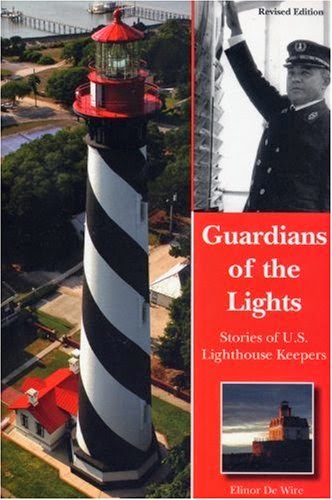
Working at MSM happened quite by chance. In the mid-1980s I was heavily into research for my second book on lighthouses--Guardians of the Lights. I often joke that this book was my third child. I have two flesh and blood children I brought into the world with effort, help, and love, and then there's Guardians of the Lights. Sometimes you labor so hard on a project, it seems like you've given birth!
 
 
How did MSM figure in all of this?
 
 
MSM had (and still has) a terrific nautical library on its grounds, the Blunt White Library. (Photo of the library garden from MSM.) Not long after moving to Connecticut in 1985, I made arrangements to visit the library and do research. The collection was a smorgasbord of fantastic resources, mostly books and photos, along with letters, personal collections of papers, and official government publications and documents--all related to lighthouses. But access to the collection was cumbersome. I had to make an appointment with the library and arrange to be met by a library staff member at the library gate; then, I was accompanied to the library, asked to remain in a research room, and all my library activities were monitored and assisted by the assigned library staff member. I had no issues with this protocol; it's standard in specialized libraries. But the process ate into precious hours I needed to pore over books and files. Much of my time in the library was spent waiting for materials to be fetched from the collection and brought to the table I was assigned in the research room. There were no laptop computers at this time, no scanners or IRIS pens. Photocopies cost $0.10 each, and not every item could be copied. I was on a budget too. Those dimes were precious. So I did much of my work by hand, taking notes. It was tedious, but it was a labor of love.

Diligently, I went to Blunt White Library day after day, in the rain and snow and cold of the winter of 1985-1986. The librarians all began to recognize and greet me, and a few went out of their way to make me feel comfortable and welcome, given the rigorous rules for outsiders using the collection. A few weeks into the research, one of the librarians--a friendly guy named Paul--tiptoed into the research room one morning and asked if he could chat with me. I was happy for a break and a chance to talk about my work; he had helped me more than any of the staff.

"You seem to have a big project," he said. "And I'm impressed with your research and study habits! Have you considered working at MSM?"

This caught me totally by surprise, but Paul explained that anyone who worked or volunteered at MSM had free access to the library stacks--no need for a staff chaperone, no rigorous rules beyond a reverence for the collection. Obviously, he knew the frustration I had with waiting and waiting and waiting.... He knew how precious those research dimes were too! And, though I didn't realize it, he knew I'd enjoy working at MSM.

Paul suggested I work just a few hours a week as a relief interpreter, providing coffee and lunch breaks for the all-day interpreters in the public exhibits. The hours seemed right, and there was paid training. I could do my research before and after my shifts. I put in my application and was hired to do the relief shift three days a week (12 hours total) in the nautical instruments exhibit, the working printing press, and the shipcarving shop. My training--three weeks of it--was intensive and inclusive. I learned about the entire museum, with a focus on my three exhibits. For an avid reader and writer, and someone fascinated with maritime history, it was heaven!

Blunt White Library thereafter became my haunt. Its massive specialized collection spawned writing project after writing project, and Paul became a trusted adviser and friend in my research and writing. Soon, my work in the exhibits expanded, as did my interests. The museum provided grist for hundreds of freelance articles about all things maritime and nautical--figureheads (shown in a photo from MSM), messages in bottles, sextants, ships, marine weather, animals that went to sea, nautical words and sea chanteys, scrimshaw, wreckers and mooncussers, shipwrecks, and lighthouses, of course.


Another opportunity I enjoyed at the museum was working as a model on Kodak Photo Day every September. Hundreds of photographers, professional and amateur, would descend on the museum that day to vie for prizes for the best images. Staff and their family members dressed in period costumes to roam the streets of the village. Some of our best family photos were taken on these days. The one of my husband and I below is better than our wedding picture!


I'm in the center, playing a colonial housewife. Notice the woman playing my mother, on the left, is doing all the work!
 
In the back row are my son, holding the flag at age 10, me, and my husband, and other models posing with visitors.

There were surprises too. One morning a man stepped into the Nautical Instruments exhibit and introduced himself as John, the contractor who operated the horse and carriage rides: "I need a driver pronto," he said with an infectious smile, "and I'm told you can handle horses." Within a week I had signed on for additional work driving a wagon or carriage around the 17-acre museum, in costume, giving tours. I learned to harness and hitch the horses and cared for them every day, including grooming, feeding, and shoveling the proverbial horse poop. Stormy, a Belgian mix, was my favorite, along with Max, a sturdy and even-tempered quarter horse. I was thrilled to combine my love of animals with my work as an interpreter and freelance writer. (Photo below by the late Bob Stinette shows me in costume--dressed as a man because women wouldn't have been hired to drive carriages in the 1870s--with Max and a visitor.)


One warm day in May 1988, the director of the MSM planetarium joined me in the driver's seat for a wagon ride. "Warm today! I need the breeze off the river!" he said, "And I love to hear all the neat things you tell visitors." He often came to the livery to pet the horses and chat, and he had shown up in my exhibits a few times to visit. Some days, as I ate my lunch sitting on the rock wall by the lighthouse, he'd join me for a few minutes and we'd talk about the stars and ships and sextants and chronometers and whatever else interested us. His name was Don Treworgy, and he was probably the museum's most beloved staff member. What I thought was simply a friendly visit that warm May afternoon in the driver's seat of the wagon turned out to be a job offer to teach astronomy and navigation in the planetarium.


I began working fulltime in the planetarium in June 1988 and continued there until 1994. My studies and research for the job spawned more articles and several books on amateur astronomy. The Florida Night Sky for Pineapple Press is pictured above. I also wrote three kids astronomy books through the museum's in-house press.

My final two years at MSM saw me wearing two hats--Assistant Supervisor of the Planetarium and Supervisor of Curriculum & Instruction for the entire museum. I'd come far since that conversation with Paul in the library years earlier. After eight years total at the museum, I left in September 1994 to teach public school. MSM had inspired new stories and projects, given me many new friends, and enriched my life beyond measure. I continued to do contract work for the museum, helping with exhibits and other projects, even after moving to the Northwest.

MSM photo of the exhibit "Sentinels of the Sea."
 
Which brings me to the two primary reasons for my visit to the museum last weekend--to see a special exhibit and re-visit the planetarium. During my years on staff, I constantly pressured the exhibits staff to do something fun with the interior of the lighthouse on the museum grounds. The lighthouse is a replica of Brandt Point Lighthouse on Nantucket. Visitors repeatedly asked if they could go inside or climb it; they wanted more than walking by and taking pictures. Finally, in 2004--a decade after leaving my job at the museum--I was contacted by the interpretive director about helping to create an exhibit on lighthouses for the interior of the replica lighthouse. It was pure fun, and I jumped at the chance to work for MSM again! I provided archival images and helped write the script. A Boston-based production company created the two videos that are projected on a five-panel screen inside the lighthouse. It's a long-awaited and marvelous addition to the museum.

When you work hard on a project, you ought to be able to at least see how it turns out! But...I've had few trips back to Connecticut since moving to Puget Sound twelve years ago, and I'm usually too pressed for time on my trips east to visit MSM. Imagine my delight last weekend when my son and daughter-in-law suggested we drive to Mystic and visit the museum. At last, I could see the lighthouse project! My son, now 36, was a kid volunteer at the museum in the late 1980s and wanted to see the place too.
 
 
Saturday, May 18 was a glorious spring day in Connecticut; it had been twenty years since I left the museum. I visited the lighthouse again and saw its long-time-coming interior exhibit (http://www.mysticseaport.org/locations/exhibits/lighthouse/), met some former co-workers, rode the horse and wagon I used to drive, got to see my granddaughters playing in the Children's Museum inside MSM--an exhibit I helped design in the early 1990s--and visited the planetarium. My director at the planetarium, Donald Treworgy, died in 2009, and the planetarium has been renamed in his honor. He worked there for almost fifty years; the place truly is his legacy to the museum. The dome has a new, more modern projector run by computer. (I used to manually operate the old projector!) Echoes of hundreds of planetarium shows I presented to audiences in the late '80s and early '90s whirled in my head like so many shooting stars...and memories of stellar moments working with Don and the other staff--Ted, Jack, Roy, Barbara, and Martha--came rushing back. Imagine my surprise when I found Martha working in the Children's Museum!


It was a fabulous experience re-visiting MSM after so many years, and great to reconnect with the past and remind myself how critical this place was to my success as a writer and speaker, even as a teacher too. Blunt White Library provided much of the grist I ground into articles and books about all things nautical, especially lighthouses. The exhibits generated story after story too, as did my friendships with people who had special skills and knowledge. I'd like to think the museum and I served each other well and that I contributed as much to the museum as it did to my career and personal life.

The take-away message of this blog post is clear, no matter what passion you pursue in life: As success is achieved, go in search of the history of your story. Be thankful to your mentors, whether subtle or  forthright. Give back. And, pass it along...

A footnote: Mystic Seaport Museum restored and sent its most treasured artifact, the wooden whaleship Charles W. Morgan, on a tour beginning May 17. While I missed seeing it anchored on the river front and being launched on this landmark journey, I'm thrilled with its recent restoration and the very public 38th voyage it's taking. For more info go to http:www.mysticseaport.org.

Tuesday, April 22, 2014

Green Seaweed for Earth Day

Part of the milieu of the old-time lighthouse keeper was seaweed, in all its diverse forms. This sea algae is plentiful, colorful, and is a shape-shifter, depending on whether it is wet or dry.

Yaquina Head Lighthouse, Oregon, has a rocky, seaweed rich shoreline. Photo from rdmosley.wordpress.com.
 

What some might regard as worthless and inexhaustible, even a nuisance and a discard of the sea gods, was to the lighthouse keeper a material of many uses. It served as fertilizer and mulch for the garden and flowerbeds and insulation for crops during cold weather. It was fed to livestock and dried for use as stuffing in pillows and mattresses. We may enjoy our memory foam beds in these modern times, but seaweed was just as soft for bedding if properly rendered.

Perhaps the most important use of seaweed was for food. "Yuck!" you say? No, it was enjoyed. Seaweed was eaten raw in salads, it was added to soups (lighthouse miso anyone?), it was steamed or boiled like spinach, it was used as a thickener for puddings such as blancmange, and it was dried to make a salty flavoring similar to monosodium glutamate, the modern taste enhancer of prepared foods.

If the lighthouse larder ran low on salt, seaweed provided it and even added iodine, necessary for proper thyroid function. (Iodized salt is a fairly recent invention.) The fact that seaweed is also nutritious and free only added to its value in the lighthouse kitchen.

Seaweed made a great insulation for a clambake, steaming the succulent, buried clams just right. It dressed wounds, served as a kind of moisturizer for the skin and hair, and was thought to have curative powers for respiratory ailments.

Of course, there were other, less obvious uses for this ubiquitous alginate. Imaginative lighthouse children might fancy themselves merfolk with seaweed hair. They donned it as wigs and beards, made wreaths of it to hang up for decorations, and wove it into the station horse's mane. Bull whip kelp became the tentacles of a sea monster or the lariat of rodeo rider. Forests of kelp fired creative storytellers!

Kelp beds abound off Race Rocks Lighthouse, British Columbia. Photo by geckopaddler.blogspot.com.


Lighthouse keepers were truly thankful for this versatile marine greenie. Earth Day hadn't been invented in the days of the old U.S. Lighthouse Service, but if it had been...you can be sure seaweed would have topped the list of green things to celebrate!