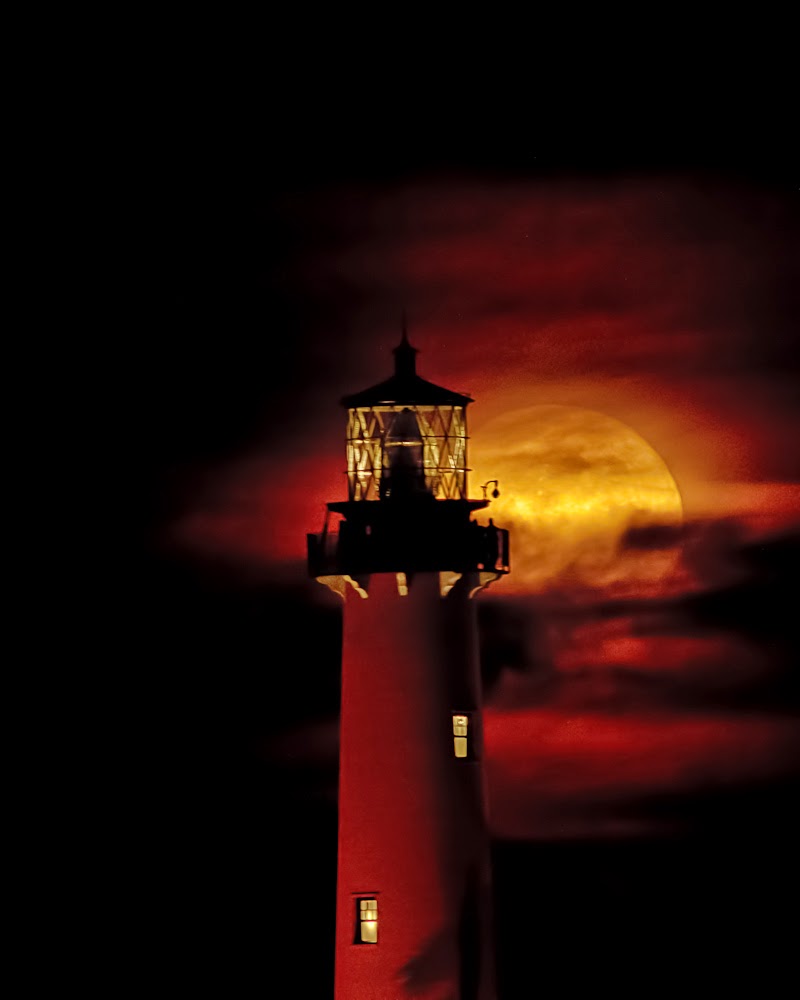
Thursday, November 6, 2014

The Power of One Book


We all know books can change the world, sometimes in big ways but more often in small ways. One of my favorite childhood books, and one that likely planted the seeds of my fascination with lighthouses, changed the world for one small lighthouse…and for thousands of kids.


The Little Red Lighthouse and the Great Gray Bridge, written by Hildegarde H. Swift and illustrated by Lynd Ward, was in my school library when I was in fourth grade. It was 1962, and a new wing had opened that year in the elementary school I attended. It included a spacious library and a fresh-out-of-college, pretty librarian named Miss Hardy. I was smitten with both the new library and all its new books. I asked Miss Hardy if I could be a library helper.

She put me to work re-shelving returned books. They were arranged by call number on a metal cart, which made pushing the cart through the stacks much easier. It was a wonderful job except that I often got distracted looking at the books I was supposed to re-shelve. Miss Hardy was patient and understanding; she was probably the same way as a child.

One day she found me sitting on the floor next to the book cart looking at The Little Red Lighthouse and the Great Gray Bridge. She sat down on the footstool near me and asked if I had ever been to New York City. I hadn’t. NYC seemed a million miles away from the rural area of Western Maryland where I lived.

“Well, that bridge in the book is a real bridge, and it’s amazing. I took a trip to NYC a few years ago to see it. It’s HUGE, with two decks for cars!! Do you know what river that is?”

I didn’t.

“It’s the Hudson River, named after a famous explorer. And big boats go up and down the river. That’s why it needs lighthouses.”


Miss Hardy then proceeded to fetch me some books about NYC and the Hudson River, and she let me check out The Little Red Lighthouse and the Great Gray Bridge. I took it home and read it to my mother that evening after supper as she sewed missing buttons on my brothers’ shirts. I even impersonated the voice of the big bridge as it spoke to its little brother, the lighthouse, telling the small tower that even though it was much littler than the bridge, it still had work to do signaling to ships. Mom smiled at the end and asked me how I thought the Little Red lighthouse felt.

“It was sad at first, because it thought the big bridge had replaced it. But in the end it felt important, even though it’s very little!” I said. “It’s glad it still has a job to do.”


(Can you see the little lighthouse on the right below the bridge tower?)

Mom nodded and reminded me of the things I could do because I was small—crawl under the bed to fetch an errant sock, pick up a dropped sewing needle with my small fingers, reach under the nest boxes in the chicken house when a hen laid an egg there, and squeeze between my big brothers in the back seat of Mom’s old Oldsmobile.

The message of Hildegarde H. Swift’s story had gotten through, not only for me, but for all kids who read her story. There are big things and little things, and though we are often impressed by big things, they are no more important than little things. Every kid wants to be big, and sometimes she feels unimportant because she’s small. That was me at time. I was the youngest child in a large family, and the smallest. Time and again I heard admonishments like: “You’re too little to do that” or “When you get bigger you can try that.” Hoyt made me feel important, like the Little Red Lighthouse.

There’s a story behind her book. It’s a tale of a tale—one that started a groundswell of protest about the possible loss of one small, beloved lighthouse. After the George Washington Bridge was completed in 1931, its bridge lights superseded the small beacon of Jeffries Hook Lighthouse, sitting on the east side of the river almost under the bridge. The tiny lighthouse and its beacon seemed inconsequential next to a giant bridge shimmering with lights. Aiming to reduce costs, the Coast Guard announced in 1948 that it would discontinue and sell the little lighthouse.

Hoyt and Ward had published The Little Red Lighthouse and the Great Gray Bridge in 1942, and it had been read by thousands of kids. Though Swift never gave a name to the bridge or the lighthouse in her book, everyone knew she had written about the George Washington Bridge and the Jeffries Hook Lighthouse. When newspapers reported that the Little Red Lighthouse was going away, a cry went up from children and their parents. How could the Coast Guard even consider destroying such a beloved icon of children’s literature?

A few years later, the Coast Guard relented, and on July 23, 1951, the lighthouse was given to the New York City Dept. of Parks & Recreation.

For years, it languished; then, the burgeoning lighthouse preservation movement took hold in the 1970s. Jeffries Hook Lighthouse was added to the National Register of Historic Places in 1979 and made a New York City Landmark in 1991. Funds were raised—some by children who donated pennies, nickels, and dimes to the effort—and the lighthouse underwent a $209,000 refurbishment in 1986 and was relighted in 2002.

Today, it is well-maintained by the City of New York and opened for tours on occasion. The Little Red Lighthouse Festival is held every September with music, food, games, tours of the diminutive 30-foot sentinel, and celebrities reading aloud The Little Red Lighthouse and the Great Gray Bridge.


While everyone knows the lighthouse by its nickname of Little Red, its history as Jeffries Hook lighthouse is not well-known. The tower started its career in 1880 at Sandy Hook, New Jersey as the Sandy Hook North Beacon, showing a red light and sounding a resonant gong on its 1,000-pound fogbell when the area turned murky. This beacon, along with the larger Sandy Hook Lighthouse, guided shipping in and out of New York Harbor and past a dangerous strand of unpredictable sand extending north from Highlands, New Jersey.

In 1889, the Lighthouse Service erected a simple pole beacon on the Hudson River at Jeffries Hook, a finger of soil and rocks jutting out into the river and posing a significant danger to shipping, especially the steamers of the day that hugged the east shore of the river on their way north. As early as 1895, the U.S. Lighthouse Board began requesting funds from Congress to upgrade the pole beacon to a better, more useful navigational light, but the wheels of government turned slowly at this time, and funding took twenty-five years to be approved.

Meanwhile, the Sandy Hook North Beacon had lost its usefulness, due to changes in the shoreline and the shipping routes in and out of New York Harbor. It was extinguished in 1917. The Lighthouse Service decided this tower could be moved to Jeffries Hook on the Hudson River for less money than a new tower would cost. In 1921, the Sandy Hook North Beacon was dismantled and moved by barge to Jeffries Hook. It was made somewhat self-sufficient, with a battery-operated red beacon and a fogbell with a striking mechanism. A keeper, who lived off-site, was hired to check on it periodically to be sure it was working properly.

Seven years after its relocation, workmen arrived and began building the George Washington Bridge. From 1931 when the bridge was opened to traffic until the 1970s when the public demanded it be saved, the lighthouse was in limbo. Hildegarde H. Swift surely noticed this and felt sad for the little sentinel. She gave it immortality in a simple, heartwarming story.

Today, that story is revered by schoolchildren around the nation. They know, their voices may be little, but they can be heard...and even something as small as a Little Red Lighthouse under a gigantic bridge is important.


Hildegarde Hoyt Swift died in 1977. She didn’t live long enough to see The Little Red Lighthouse restored. Illustrator Lynd Ward saw the first preservation efforts before he died in 1985.
A footnote to this blog—
I have never visited The Little Red Lighthouse! Yet, it launched my interest in lighthouses. Now, that's the power of one book!

I think it’s time I do go see it. After all, it subtly inspired my successful career as a lighthouse historian and author in the lighthouse genre. I think I’ll go see it next time I visit my granddaughters in Connecticut and take them with me. It’s time for a new generation to get inspired by a cherished, timeless story.
 
(Photos of Little Red are from Wikimedia Commons and Architectural Digest.)

Wednesday, October 29, 2014

Scary Words Every Lighthouse Keeper Knows!


For Halloween week, I’ve been posting blogs about lighthouse ghosts and the overall scariness of lighthouses. Fortunately, our vocabulary is rich in words to describe this haunted milieu; the possibilities are numerous.  And, of course, I love words. All writers do. We are logophiles!

Just for fun this Halloween week, here’s a roundup of words that might be categorized as “scary,” in the right context, and some anecdotes about lighthouses to go with them. Would-be lighthouse keepers beware! This All Hallows Eve lexicon could apply to you!

Nyctophobia: If you suffer from this anxiety, don’t even consider being a lighthouse keeper. Nyctophobia is “fear of the dark!” Yes, a lighthouse is supposed to banish the dark with its bright beacon, but you’ll be up all night communing with it…walking back and forth from your house to the tower to check the light, climbing dark stairs, chasing moths away from the beacon. Before electricity was introduced at lighthouses, the interior of light towers was dark, very dark…..except for the hand-held lantern a lightkeeper carried. It didn’t provide much light—not like modern-day LED flashlights—and it made curious shadows on the wall and stairs. You couldn’t see very far ahead of you or behind you. You were boxed into a small space of lamp light. I suppose people who lived before electric lights were accustomed to this limited sight distance. Maybe they didn’t mind the darkness as much as we do today. Our world is full of light and, frankly, our night isn’t very dark.

 Stygian: This is another great word for Halloween, as it describes the worst sort of darkness, truly black. Lighthouses stand in some of the most remote places, devoid of artificial light. So, if the beacon in the light tower went out on a cloudy, moonless night, you’d find yourself in stygian darkness. You’d have to wade through unimaginable blackness to relight the beacon. The human eye takes fully ten minutes, on average, to adjust to darkness, and even then the rods in our eyes—the light receptive cells—aren’t very efficient.  You know how scary it is when the power goes off in your house and you stumble in the darkness to find a flashlight. It was much worse at isolated lighthouses. Keepers carried a small house lantern to find their way and hoped the wind didn’t blow out the flame.

Murk: Few lighthouses are without fog, at least for part of the year. It’s creepy stuff. (Creepy! There’s another nice Halloween word!) You can’t see far into the fog, and as objects emerge from it, they appear ghostly. (Another nice Halloween word!) Several lighthouses in the United States hold records for hours of fog. The sentinels at Saddleback Ledge and Petit Manan in Maine and Point Reyes, California are sometimes socked in with fog a third of the year. Point Reyes had a loooooonnnnng stairway down to the light tower and fog signal building. On foggy nights, it was a long, murky walk for the lightkeepers. Such an unsettling experience it must have been for them to make their way through the murk on that seaside stairway several hundred feet above the waves. One errant footstep, and they could easily tumble onto the rocks and into the sea! Add to this, the strange appearance of a lighthouse beacon in the fog, and it will surely raise the hair on your neck.

 Photo by Tyler Wescott
Eerie: Lighthouse are eerie! I’ve been inside hundreds of them, many at night, and they are truly eerie—like an attic and a basement rolled into one. Air moves up and down inside the hollow tower, and it’s clammy. You get goose bumps from the moist cold air. As drafts of air move up and down inside the tower they softly sigh, as if some sad unseen presence is with you. This air movement is necessary for the health of the lighthouse, to keep it dry inside. Lighthouses are said to “breathe” when air moves through them correctly. Yikes! A breathing lighthouse??!! Shadows lurk all around you and any type of noise is amplified by the confined space and the reverberation of sound off the walls. The echo of your footsteps makes you think someone is following you. You’ve got to keep your wits about you, or you’ll swear you’re surrounded by ghosts.

Moan and Groan: These are classic Halloween words. Wooooo! Every tour I’ve given of a lighthouse has someone saying Woooo! as we climb the stairs to the top. It’s irresistible. But did you know some lighthouses moan and groan on their own? The tall, iron screwpile lighthouses of the Florida Reef are known for this phenomenon. Tall masonry lighthouses with iron stairways moan too. How do they do it? It’s a property of the metal, which expands in the heat of the day and contracts when the air cools. As metal expands and contracts it makes noise—moans, groans, shrieks, screeches, bangs. If you grew up years ago when we had metal radiators in our homes, then you remember the clanking and banking of the radiators as they heated up and cooled down. Carysfort Reef Lighthouse, standing with its iron legs screwed into the coral of the Florida Reef, is famous for this noise. Lightkeepers knew the cause, but they loved to initiate a new keeper or frighten a visitor by telling the story of the ghost of an old lightkeeper named Capt. Johnson. He was a great sinner—a drinker and womanizer who sometimes let his light go out. When he died, his punishment was eternal purgatory as a lighthouse ghost. At night and at dawn, he is often heard groaning, moaning, and generally clanking and banging about in Carysfort Reef Lighthouse.


 Photo courtesy of NOAA
Gruesome: It’s a horrible word, enshrouded in blood, injury, and violent death. Lighthouse history is replete with gruesome events.  Shipwrecks, drowning, falls, fires, earthquakes, tsunamis, suicides, murders—these are but a sampling of the horrors lightkeepers experienced. And such ghastly events often spawned ghost tales.
At St. Simons Lighthouse in Georgia, one lightkeeper went berserk (berserk—a wonderful Halloween in itself!) and shot and killed another keeper. Not long afterward, the dead keeper’s ghost was heard walking up and down the tower—a lighthouse poletergeist!
Another lighthouse ghost is in the person of Blackbeard the pirate, who was killed by beheading near Ocracoke Lighthouse, North Carolina, so naturally we hear of his headless specter seen in the area searching for his head.
A phantom ship, lost off New Haven, Connecticut centuries ago, sometimes appears in the misty harbor sailing above the water, just off the breakwater lighthouse. Similarly, the Palatine Lights are seen off Rhode Island’s Block Island Southeast Lighthouse, the place where the ship Palatine burned at sea.
A woman who drowned off Point Vicente Lighthouse, California walks the grounds of the light station nightly, her luminous hourglass form moving in a circle around the lighthouse. (The Coast Guard has identified the source of the ghost as a reflection off the tower’s huge lens.)
And so it goes, story upon story of lurid events at lighthouses that gave rise to their famous ghost tales.
 

 Photo by Studio 950
Macabre: And then there’s that spectral cat I told you about in an earlier blog, the one that haunts the upstairs of the keeper’s residence at Fairport Lighthouse in Ohio. The reputation of the little feline ghost was given a boost when workers found the desiccated skeleton of a cat in the walls of the house. The little corpse is, itself, a fright to see; it’s on display in the lighthouse museum. Cats are so much associated with Halloween! Considered the familiars of witches, their mysterious eyes and silent paws can give us a fright. I’m the first to admit I jolt when one of my felines jumps on my bed in the middle of the night. Read “Things that Go Bump in the Lighthouse” to learn more about this ghost cat of Fairport Lighthouse—a very macabre story!


I could go on, but your timbers are likely shivering enough by now. Chilling, shocking, mysterious, macabre, terrifying, creepy, supernatural tales about lighthouses abound!

Monday, October 27, 2014

A Lovely Song...

Neptune's Car's "I'm a Lighthouse Keeper"---

The music video was filmed at New Hampshire's Portsmouth Lighthouse. (There's a short ad first; be patient!)


Wednesday, October 22, 2014

The Ghost that Left the Lighthouse


Long ago, on a lonely lighthouse on a remote island, a wild autumn night ushered in a fierce storm. The beacon was lit, and the keeper, his wife, and their pet cat were safe and warm in their cozy little house at the bottom of the light tower. Reading occupied the man and woman, while the cat lay curled by the woodstove sleeping. What else was there for a lazy lighthouse cat to do but sleep?


The storm was horrific, with rolls of thunder, pelting rain, and gusts of wind. Periodically, the windows of the house flashed with lightning and rattled as the booming streaks split the air. The clamor surely drowned out all sounds, or so it seemed...


Abruptly, the wind died down and the rain eased up. The rumble of thunder and streaks of lightning seemed distant at that moment. The light station grew quiet....

Clomp, clomp, clomp!

The keeper and his wife looked up from their reading. The cat raised its head with curiosity, a bit perturbed to have its evening nap interrupted.

"Did you hear that, dear?" the lightkeeper's wife said. "What was that?"

The lightkeeper shrugged. "Might be the lantern door come loose and banging in the wind. I'll go check."

As he rose and headed for the tower door, the sound came again.

Clomp! Clomp! Clomp!

It sounded like footsteps...heavy, wet boots on the stairs in the great, tall tower above the house. Someone...or something...was coming down the stairs.

The keeper's wife looked alarmed. The cat flicked its ears in the direction of the lighthouse door.

Clomp, clomp, clomp!

The footsteps grew louder, and heavier, and closer.

Clomp, clomp, clomp!

As the footfall neared the base of the lighthouse, the cat rose from her rug by the stove and stared intently at the door leading to the tower stairs. What could be coming, she wondered.

The keeper and his wife wondered too, for there wasn't a soul on this wild part of the coast other than the residents of the lighthouse.

Clomp, clomp, clomp!

Without warning, the latch lifted on the lighthouse door with a metallic click, and the door swung slowly open with a protracted, screechy, wooden whine. Scccrrrrrcccchh!

The cat arched her back!


Clomp, clomp, clomp! went the footsteps loudly across the floor, but no feet were seen, no shoes, nor anyone to wear them.

Hissing and backing away from the phantom footfall, the cat's eyes seemed to follow the unseen intruder as it strode across the room.

Hiss!!!  Growl!!!

The cat's fur stood on end and her tail had increased three times in circumference. The keeper and his wife sat numb, their mouths agape and eyes wide.

Click! The latch on the front door of the house lifted under the power of invisible hands. The cat hissed again and spat at the door.

"What does Old Thomas see?" the wife asked, bringing her handkerchief to her mouth.

"I dunno," replied the keeper. "He's some mad though, isn't he?"

The keeper and his wife slowly rose from their chairs and watched as the front door swung wide to reveal the wild, stormy night. Lightning splintered the sky and thunder rolled, and the wind--which had seemed to calm only minutes earlier--pummeled the house and rattled the walls.

A rush of dry leaves swirled into the house just before the door slammed shut. Bang!

The muffled sound of quickly receding footsteps disappeared into the night.


The cat relaxed its indignant pose, twitched its tail with irritation at having been so rudely disturbed, and settled back on the rug, paws curled underneath its chest.  The keeper and his wife shrugged.

They went to the tower stairs and peered up the long, hollow, column of stone with its intricate spiral stairway. Nothing. No sound. No one.

They went to the front door, opened it, and looked long into the tempestuous and stygian night. Nothing. No sounds other than the wind and rain and grumbling thunder. No one in sight.

Closing the door, they chuckled nervously and returned to their chairs and books. Deep in the woodstove a burning log repositioned itself and crackled. The cat barely noticed, for it was already asleep again and dreaming of fat mice and bowls of milk from the light station cow.

As the night storm wore on, the keeper and his wife yawned, closed their books, and dozed. When the mantle clock chimed ten times, they rose to go to their warm bed.

"I'd better check the light first," the keeper said, and his wife nodded.

"Let's hope there'll be no more unseen visitors tonight," she replied with the hint of a smile.

Neither knew what to make of the strange footsteps, the animated doors, and the odd behavior of their cat. A lighthouse is a curious place at times, a haunt for restless spirits. Perhaps one such spirit had escaped his stormy purgatory this night and was now making his way to a quieter place.


This story is adapted from an anecdote told to me by the late James Gibbs, author of numerous maritime books, including West Coast lighthouse books. Gibbs said this was a popular story he had heard, in various versions, from several lighthouse keepers he interviewed. No one knew what lighthouse or lightkeeper had originated the yarn.

Coastal storms often are intense, and gusts of wind opening and closing doors is not uncommon at lighthouses. Metal stairways in lighthouses make all manner of odd sounds after dark. I'll add that cats were popular pets at lighthouses and they usually became incensed by visitors of any type, spirit or flesh. A little embroidering of the facts could easily produce a memorable tale like this one!

Saturday, October 18, 2014

Things that go bump in the lighthouse...


Photo by Bruce Robie
****************************************
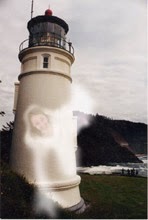
This time of year, I get emails and phone calls from friends telling me they've seen me on TV—”Haunted Lighthouses.”  I’ve done two segments in this series with Impact TV, and it’s been a lot fun. The crew was great, and we all got a laugh or two as we recreated the sights and sounds of the best ghost tales from lighthouse lore. Viewer ratings are always high when the shows air, and the calls and emails pour in. People love this kind of stuff.

   Lighthouses lend themselves to supernatural tales. They’re mysterious—tall, dark, hollow towers full of cobwebs, shadows, strange sounds, and odd smells. Climbing a lighthouse at night can give you the creeps. Moist air moves up and down the stairs, making mournful sighs. Sometimes it feels like a clammy hand on the back of your neck! The sea moans and crashes nearby. And, of course, there are tragic stories to recall of shipwreck, drowning, and storm damage. It’s easy to understand why people think lighthouses are haunted.

   Lightkeepers of yore claimed they met many lighthouse ghosts, and some of the keepers wove some great yarns about them. Docents at lighthouses that are open to the public continue the tradition. I’m the first to admit I’ve had some eerie experiences at lighthouses, but I usually blame them on my overactive imagination and natural phenomena I know can fool our senses. I’ll provide a few examples...
 
********************************


A young Coast Guard keeper took me to the top of Florida’s Jupiter Lighthouse in the early 1980s. I asked him if the tower was haunted, and he chuckled. “Only if you want it to be,” he quipped. I was taking notes on a clipboard as we toured the lighthouse, and about three-quarters of the way up the stairs I dropped my pen. It clanked and clinked and tapped and rapped on its way down and through the open iron stairway, echoing as it went. I  looked at the Coastie, and we both laughed. “Now that sounded spooky!” he said. When I returned to ground level, there stood my husband with the pen in his hand.
 
***************************************


In 1985, as my family was transferring from a military assignment in Hawai’i to the submarine base at Groton, Connecticut, we drove the long route up the West Coast from Oakland to Seattle and photographed lighthouses along the way before we turned east. On our third day up the coast, we stopped at Newport, Oregon and Yaquina Bay Lighthouse. The docent was about to close up for the day, but she kindly allowed me in to see the old lighthouse. My husband and the kids took a stroll outside. They’d seen enough lighthouses!

I toured the downstairs rooms, which were furnished in the late nineteenth century period. There were a few displays in the rooms and a gift shop.

“May I go upstairs?” I asked the docent. She nodded but informed me I’d be going alone.

“I don’t go up there. It’s the ghost, you know. I’ve seen her in the upstairs rooms.”

I nodded sympathetically and commented that I hoped I wouldn't see a ghost.

“Be sure to look at the floor by the attic door. That dark stain is blood. She died there—Muriel, I mean.”

I’d heard about Muriel. Her story is well-known in lighthouse history and in Newport. She was with a group of young people messing around at the old, ramshackle lighthouse in the late 1800s. The lighthouse was abandoned and an eyesore. The young folks went inside, poked around—as teenagers will do--then left. Muriel announced that she’d left her scarf inside the lighthouse and ran back for it. Minutes ticked by, and then a blood-curtling scream was heard. The teens ran back inside and found a pool of blood upstairs but no sign of Muriel. A thorough search was made of the lighthouse and the grounds, but she was never found.

Her disappearance remains a mystery today, except that…there happened to be a dime novel circulating in the late nineteenth century with a very similar plot. Most historians believe the story was repurposed for this yarn to amuse tourists. It gained such popularity it remains a part of the interpretation in the lighthouse museum today.
As for the docent who wouldn’t go upstairs, either she was an excellent actor or she truly was afraid of the possibility of meeting a ghost. Stories can have that sort of effect on people, especially when they're alone in an old building. I’ll admit that standing in the upstairs, with late afternoon sunbeams pouring through the windows and reflecting off dust particles, and everything so quiet and still...well....I could certainly imagine a young girl looking for her scarf, searching in every corner, and then…tragedy.

I thanked the docent profusely for allowing me inside the lighthouse museum past closing hour and bought some trinkets from the gift shop. Some twenty years later, I would return to the lighthouse with Impact TV to talk about Muriel for a documentary on haunted lighthouses.
*********************************************


I visited New London Ledge Lighthouse in the late 1980s as it was being automated and sealed up. There were still five Coast Guardsmen stationed on the lighthouse, three of them there when I visited and two on leave. Ledge Lighthouse has a famous ghost named Ernie, supposedly a former keeper who threw himself off the top of the tower after he discovered his wife was having a romance with a harbor pilot. No one has ever been able to authenticate the story, and records for the lighthouse do not indicate there was ever a suicide. But plenty of people have reported the ghost. He was given the name Ernie for fun, since he's a bit of a trickster.

The Coasties were ultra-eager to help me up from the pitching boat next to the slimy, alga-covered stairs on the side of the lighthouse. It’s a caisson lighthouse that sits on a rock ledge in the middle of the Thames River in New London, Connecticut. It was a stag station in its last years of staffing—men only. So a visit from a lady was a big deal. With me on the boat was Brae Rafferty of Prjoect Oceanology at Avery Point. We were both interested in what would happen to the lighthouse after automation.

The guys were happy to show us around the station and offered us coffee and peanut butter sandwiches. We declined both but asked if we could climb to the lantern and take in the view. As we headed up the stairs, the OIC reminded us to "watch out for Ernie," tongue in cheek of course. It was a cold day, but the lantern was warm. It was also quiet—its own little world looking out over the harbor. The ferry from Orient Point passed by. Some small fishing boats were bouncing about in the chop farther out in Long Island Sound. Flies buzzed in the windows, wondering how they’d become prisoners in the lantern.
We stepped carefully out on the gallery, and I peered down at the water below. The lighthouse seemed to grow upwards from the water. The wind was fierce, lifted my hair and whirring loudly around the edges of the tower.

“So Ernie jumped from here?” I asked Brae.

He nodded and chuckled. “That’s what I’ve heard.”

I softly called Ernie’s name. "Errrrrnie...where are you?" Brae joined me, smiling. We were having fun, of course, but then the access door to the gallery banged in the wind and we both jolted.

“I think he’s trying to lock us out! I said.

“Well, then we’d better get back inside before he succeeds!” Brae added.

Down in the warm kitchen, the Coasties all related tales of encounters with Ernie. One man said Ernie tried to smother him with a pillow one night. Another claimed Ernie purloined tools, drank coffee from cups sitting on the counter, and rearranged the books on the shelf.

“He’s real alright,” the OIC said, “…if you want him to be.”

A few weeks later I was invited to appear on a local TV program and talk about the lighthouse. I gave a bit of history, discussed the automation that had taken place, and then I was asked to talk about Ernie. Viewers called in with questions and comments, and all of the talk was about the ghost. People were much more interested in the ghost of the lighthouse than its flesh and blood occupants of the past.
****************************************


usatoday.com
 

One night in the mid-90s I climbed to the top of Ponce Inlet Lighthouse at Daytona, Florida with the late Tom Taylor, one of the founders of the Florida Lighthouse Association. There was a night rocket launch scheduled at Cape Canaveral, and Tom told me the top of the lighthouse was a great place to view it. As we sat on the lantern talking and enjoying the cool breeze and the night sky, groaning, screeching sounds began. They sounded like some sad, sick spirit. Arrrgggh! My eyes widened. Tom laughed and told me the stairway was the cause. It was cooling down from the hot day, and its metal joints were contracting, making the groaning and screeching sounds. Even though I knew the source of the clamor, it was still quite unsettling to hear.
******************************************


In February 2005, I stayed for a week at New Dungeness Light Station in Sequim, Washington to serve as a keeper. I had four co-keepers, two couples from the area. They voted to give me the bedroom that faced the lighthouse, since they had slept there on past stints of duty as keepers. It was exciting to lie in bed and see the beams of the lighthouse whirling around in the misty air. In fact, it was downright mesmerizing. Killdeer flew madly at the beams, streaking through the humid air like kamikazes. As I lay under the blankets enjoying this odd scene, a bright light flashed on my bedroom window, crawled onto the wall, and flickered wildly before vanishing. I jumped out of bed and went to the window in time to see the light return again, strafing the house and shining on all the windows. It paused on my window and seemed to study my silhouette. This reminded me of a sci-fi movie where a spaceship hovers overhead and shines a bright light down on unsuspecting citizens of earth! Soon, I identified the source of the light. It was a fishing boat some distance off the sand spit. The fishermen were having some fun shining lights on bedroom windows!
**************************************


I stayed in the B&B at Heceta Head Lighthouse a few years ago to celebrate my friend’s birthday. All evening, we sipped tea and told stories. Naturally, it being September, the story-telling turned to the quickening seasonal darkness and ghosts. Heceta Head Light Station is famous for its ghosts, namely the Gray Lady, also called Rue. Supposedly, she is the sad spirit of a long-ago keeper’s wife whose child died. The innkeepers say she’s searching for the little girl, who sometimes appears herself. Rue has been seen in the attic window, in the upstairs of the house, and on the grounds. Dozens of visitors to the inn have reported her eerie activities, including moving objects around and pilfering things like jewelry and cosmetics. During my stay, the scary tales flowed like the steamy tea from its china pot! My daughter had made tea for all of us and accidentally burned her hand in the process. After we went to bed, her hand was hurting so bad she told me she was going down to the kitchen to fetch a Ziplock bag of ice to soothe it. We were sharing a bed, and shortly after she left for the kitchen, I heard a soft scratching at the door, which was open a crack and let in the hallway light. Then the door creaked softly and opened a bit more, I waited, lying very still.

“Jessica, is that you?” I asked.

No answer. More scratching, and a little soft thumping too.

Seconds later, something landed on the bed at my feet. I gasped and drew my feet away from it. Whatever it was, I had frightened it and it bolted from the room. A few seconds later I heard scratching again. Then quiet footsteps and whispers. Jessica appeared at the door.

“Mom, do you think it would be okay to let Dawn in our room to sleep with us? I think she's lonely.”

Dawn was one of the inn’s many cats. It was her little paws I had heard scratching and thumping, and Jessica’s footsteps and whispers.
************************************


I learned of a lighthouse ghost cat during a phone interview in the early 1990s. The charming little spirit ended up in several of my books and articles—no surprise, since I am a cat lover. Pamela Brent, curator of Ohio’s Fairport Harbor Light, was living in the apartment above the museum in the old keeper’s dwelling at the time. We talked about the lighthouse by phone. Brent told me the dwelling's upstairs apartment has a ghost kitten that skitters about the floors and hallway. She had seen it herself. It was a friendly little ghost, a fun one. It looked like a little puff of gray smoke moving over the floor. Brent said it had a sweet face with very bright eyes.

When you visit the lighthouse museum, docents will show you a desiccated cat skeleton that was found in a wall when repairs were done to the dwelling years ago. (See image below.) Brent believes it’s the remains of a kitten belonging to a nineteenth century keeper's sick wife, a kitten that accidentally was walled in by workers. (Let’s hope it was an accident!) The little kitty provided amusement for the keeper’s ill wife who was bedridden for many weeks. There’s also a ghost of a little boy at Fairport Harbor Light. He’s thought to be one of the same keeper's children who died at about age five.


  Fairport Harbor Historical Society
*******************************************
 
Whether you believe in ghosts or not, a good place to go looking for them might be a lighthouse!

October is great time to tell ghost tales, so if you volunteer or work for a lighthouse nonprofit, consider having a haunted lighthouse event. It can raise awareness about the lighthouse, bring in revenue, and entertain the public. A few spider webs at the windows, someone in a sheet, a carefully timed groan or two—-and you’ve got delightfully frightened visitors. Not a bad thing, really.

How about a trick-or-treat night at the lighthouse? Station some “characters” at various places around your lighthouse to hand out candy to kids in costume—the oil house, the keeper’s house porch, the base of the tower, and the lantern. Kids don’t forget fun like this and will come back to visit when they are adults and maybe bring their kids too.