Wednesday, January 8, 2014

A Resource for Educators

Here's a good resource for anyone looking for a list of lighthouse books for kids. It was created by me and several other book reviewers a few years ago for the American Lighthouse Coordinating Committee. Click on the link, then scroll down to the center of the page. You'll find a link to a PDF.
Annotated Bibliography of Children's Lighthouse Books

I love this one by Jan Brett--


Saturday, January 4, 2014

A Few 2014 Resolutions...and Confessions


I had a lot of time to think about New Year's Resolutions this week. After a visit with my son, his wife, and my granddaughters in their New England home, I was stuck in an airport hotel Thursday through Saturday thanks to a big snowstorm that arrived right before my schedule flight home. Propped on the hotel bed as a blizzard swirled against the window, I did crosswords in the new Simon & Schuster crossword puzzle book I received for Christmas. I read some books on my Kindle. I watched movies and old shows on the TV Land channel. I gave myself a manicure. I soaked in the tub. I watched the snow accumulate and cloak the world in an ermine mantle. I drank cup after cup of coffee and tea. I raided the vending machine. I played Sudoku on my Kindle, and Mahjong, and Spider Solitaire, and Word Twist....

On the practical side, I tried making lists of chores to do when I arrived home. I categorized them and rank-ordered them. I came up with some new projects to do around my house and then remembered all the old ones I hadn't completed. There was a lot of crossing out of items and revising others. There was doodling and designing and planning. There was a nap here and there and an occasional visit to the hotel restaurant and, afterwards, a walk through the airport and hotel.

Finally, I scribbled a few career goals for 2014. Call them a freelance writer's New Year's Resolutions--those ambitious promises we make to ourselves every January. I make them every year, but they're not always as formalized as they are this year, thanks to that persistent snowstorm and bitter cold that kept me confined. Cabin fever begets good ideas.

Here are some of the grand plans!

  • Become more disciplined about my writing time, as in: "I will write two to four hours a day every weekday." Yeah, I'm all over the place with writing commitment. My adjunct teaching schedule is one of the reasons, as is the freelancity of my work, but I tend to use these as excuses. Some days I work an hour. Other days it's a respectable four to six hours. Still other days, I work all day, lose track of time and space, forget the basics like getting dressed and brushing my teeth, eating, and going to bed. Occasionally, days go by without a single finger tapping the keyboard. I do need to get more consistent.
  • Finish one article before starting another! Actually, I don't want this to happen, at least not totally. Having several articles in the works at once is a good thing. It keeps me excited and revitalized; it's brain fitness. Those handy yellow folders on Windows make organizing the articles pretty easy. I learn a lot. I diversify. One topics sometimes breaks into many. But, the chase is often more fun than the capture. At some point, I need to quit the chase and finish an article, not continue to file notes and images and ideas about it. I need to get better about the capture...and the sale.
  • Learn to use voice recognition software. I've been putting off this chore. It's the "learning" part that I'm avoiding. I dislike mastering new technology. I know once I get the hang of it, it'll be a really useful tool and I'll wonder how I lived without it. It's just getting to that point that's the chore. I have scads of old articles in print that need to be converted to electronic copies. I could hand type them, but voice recognition would make the chore so much easier. And writing an article might turn out to be easier with voice rather than pen. Who knows?
  • Do a better job marketing myself and my work. I took an eBook course last year (about this time of year, in fact) and learned that I was woefully poor at self-marketing. I went home with a pile of homework. This blog, book trailers for You Tube, and my author Facebook page were among the assignments. One of my publishers kindly branded my name a few years back, so I should run with that. "Invent oneself!" was my eBook instructor's mantra.
  • Post an article on this blog at least twice a week. A blog survives on new material. Like a car, it needs fresh fuel to keep running. I know that. I've been working on that of late. The holidays and travel derailed my effort a bit, but here I am writing a blog entry today. I'm doing it! (I even read a how-to book about blogging on the plane heading to New England last week.)
  • Keep up with receipts for my writing business, and especially keep up with my mileage logbook and daily activity journal. It's homework, and I dislike it. But it has to be done. It's a good snapshot of my work days and how efficiently I run my freelance writing business. I so often forget to log mileage when I'm traveling to a speaking engagement or going to a library or museum for research, or even heading to Staples to buy supplies. Some days, I neglect to take time to list the chores for the day and cross them off as they're completed. (It's more fun to sit down and just write!) It all counts; it's important. Uncle Sam isn't much interested in what I write, but he absolutely wants me to account for my time and money! (So does Linda, my tax preparer.)
  • Read more for pleasure. I love to read. I read a lot, and I read a variety o fprint and electronic media and topics. But seldom do I read strictly for fun. Even a novel ends up being a note-taking activity. I find words I like, historical info, imagery, fun literary devices, and ideas...always lots of ideas. I'm not sure I can read anything anymore without a note pad and pencil. I'm so accustomed to interacting with print in a very physical way. Before the holidays, I downloaded a lesser-known Willa Cather novel on my Kindle. I'm determined to read it just for fun, without a scribe's tools!
  • Finally, once again, I resolve to not eat in my office at my desk. I MUST force myself to take a break for meals and snacks. I'd do this if I worked in an office somewhere else, not in my home. Here, I find it so easy to dine at my desk. My resolution: Get up and walk away from the work and the office, give it a break, let ideas rest and rhythms be broken. It's healthier. Will I do it? (Hmmm. Eating crackers as I write this....)

Thursday, December 19, 2013

From the Archives: Christmas Message 1937

The Commissioner of Lighthouses in 1937, Harold Davis King, sent out the following Christmas letter to all employees of the U.S. Lighthouse Service. I think it has a universal message, even so many years after it was composed.

It ought to be easy for us of the Lighthouse Service to practice 'Peace on Earth and good will toward men,' since the whole purpose of our chosen careers is the rendering of service to our fellow men rather than control or domination over them. So it is, therefore, that we many be gratefully mindful that we are public servants and that there is not only opportunity but necessity for the preservation and cherishing of idealism in a world which nowadays in so many quarters and in so many ways seems beset by the forces of materialism. 'Man shall not live by bread alone' are the words of Him whose advent is celebrated by the Christmas season, and the golden rule, which in various forms has been given expression as fundamental to many the great religious movements in human history, seems more than ever the ultimate hope of humanity to those who retain a lively faith that is is more blessed to minister than to be ministered unto.


Tuesday, December 17, 2013

The Wright Stuff

Today is the 85th anniversary of the Wright Brothers' first flight at Kill Devil Hills, Kitty Hawk, North Carolina. In attendance that day was William J. Tate, the lightkeeper of the Currituck Sounds lights. These were a series of small beacons to serve the shipping traffic in one of the protected sounds enclosed by the Outer Banks. Tate was in charge of a total of 42 small lights spread over a distance of 65 miles. These were lighted, mostly, with 8 day kerosene lanterns hung from posts and tripods.


From 1900-1903, Tate served as Postmaster of Kitty Hawk. He is pictured above with his wife and daughters and a friend on the porch of the post office. (Photo from the library of Congress.) Tate gained famed for his lifesaving skills on the Outer Banks, but he is more famous because he assisted the Wright Brothers in their effort to make the first successful flight. He sent weather and topographical information to the Wrights in Ohio, trying to convince them Kitty Hawk was the best place to try out their flying machines. (A piece of his correspondence is below, courtesy of the Library of Congress.) When the brothers visited the Outer Banks for the first time to scout out a place to experiment with flights, they boarded with Tate and his wife. The Wrights assembled their first experimental glider in the Tate's front yard, and Mrs. Tate offered up her sewing machine for the fabrication of sateen wing covers. The sewing machine is now on display in the Wright Brothers Museum at Kitty hawk.


Following the success of the Wright Brothers, Tate developed a great interest in aviation and remained in contact the Orville and Wilbur Wright. He served as the lightkeeper of the North Landing Lighthouse on the Outer Banks from 1919-1939. In 1920 he became the first man make an inspection of lighthouses by airplane. The U.S. Lighthouse Service Airways Division began in 1926, buoyed by Tate's work and an increasing need for ground-based guidance for aircraft. The Division was responsible for providing airway navigation  beacons for all fliers, but especially for airmail pilots. Scott Price, an archivist in the U.S. Coast Guard Historian's Office in Washington, D.C. has an excellent article on Tate and the birth of the U.S. Lighthouse Service Airways Division. http://www.uscg.mil/history/articles/indispensable_men.asp

In 1928, Tate paid $200 to have this memorial erected in his yard at Kitty Hawk. It underscored his pride at having participated in such a landmark event in history. More information about Tate and this picture can be found on www.wright-brothers.org.


Here's an image of Tate in his later years, from www.wright-brothers.org.


The Coast Guard honored William J. Tate in the 1990s by naming a Keeper Class buoy tender for him. The cutter is based in Philadelphia.

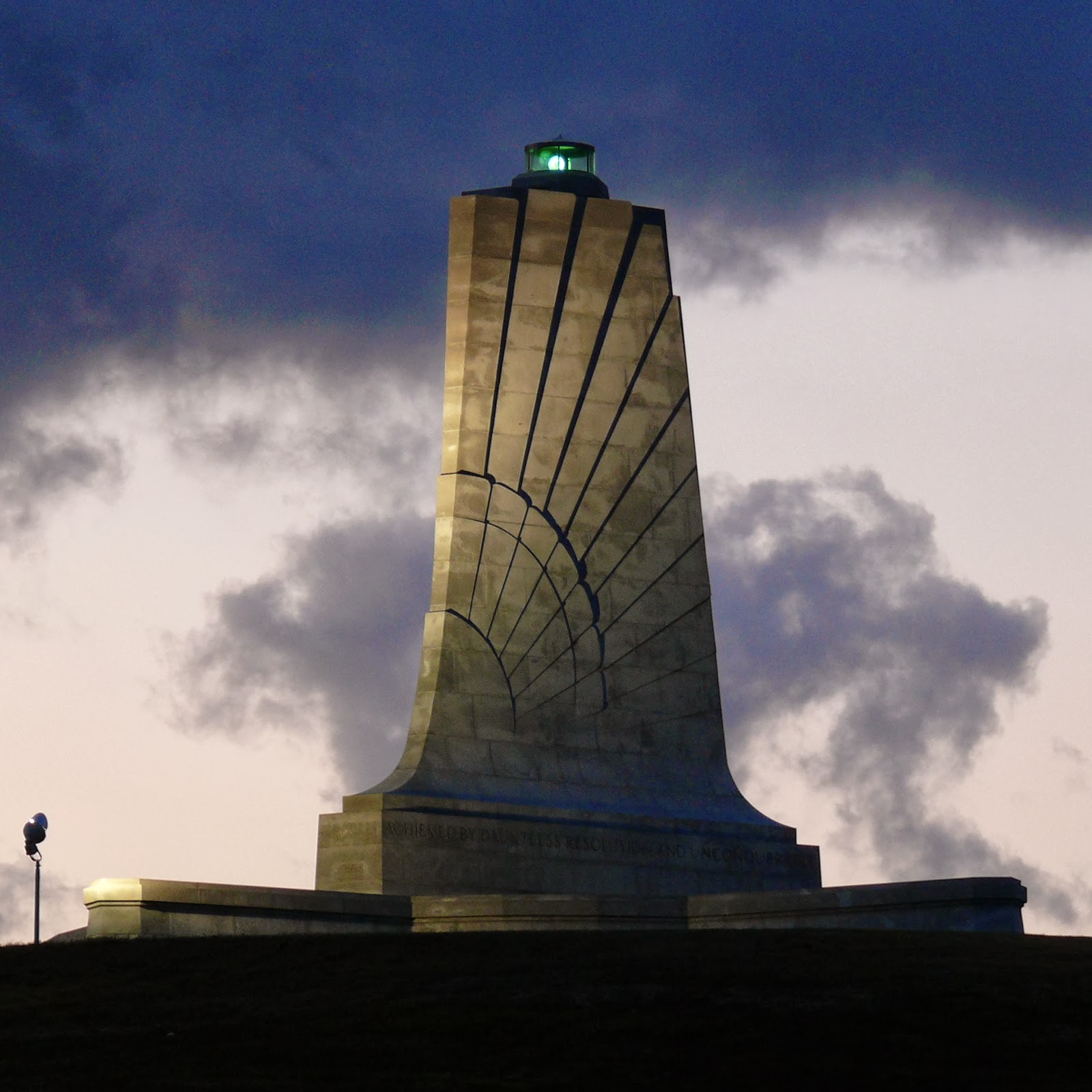
A bit of trivia: When the Wright Brothers Monument was built years after that first historic flight, the U.S. Lighthouse Service was asked to design and install the beacon for it. The monument features an antique "Fresnel on the Half-Shell," a special optic developed by the U.S. Lighthouse Service in the 1920s for airway use.  (Photo below by Ken Thomas on Wikimedia Commons.)

Saturday, December 14, 2013

A Lighthouse Christmas Card

Every year since about 1973, I've combed the stores for lighthouse themed Christmas cards. I love them, and they say "me" like no other holiday greeting. I was living in Maine in 1973 and had fallen hopelessly in love with lighthouses--their look, their histories, their stories. Maine has many pretty lighthouses to make a girl smitten with them! My favorite was Seguin Island Light, off the mouth of the Kennebec River. Jonathan took me out to the beach facing the lighthouse for picnics and walks and beachcombing. It was mesmerizing, with a hypnotic beam.

Sometimes, I found lighthouse Christmas cards in the Navy Exchange or Coast Guard Exchange, since USN and USCG members love them. Some years, I took pictures of lighthouses and mounted them on card paper, and then drew sprigs of holly, bells and ribbons, or Christmas trees to make them merry. Red Barn Studio in Rhode Island made some pretty ones in the 1980s; I bought them in the gift shop of Mystic Seaport Museum where I worked.

Everyone loves my lighthouse Christmas cards. One of of my sisters-in-law has a Christmas card contest every year, posting all of the cards she receives on her refrigerator along with an envelope for votes. I've won that contest a few times with my beautiful lighthouse cards! Nancy says the family never wonders who sends the lighthouse card every Christmas. They know it's me!

Today, lighthouse-themed Christmas cards are easy to find because lighthouses have become so popular. But back in the 1970s and 1980s, I had to do some serious searching to find them. After about 1990, I began receiving lighthouse Christmas cards from friends and fans, and today I have quite a large collection of them.This year, I decided to scan some of those pretty cards and post them on my author Facebook page day-by-day as a sort of fun Christmas countdown. (You'll find a link to my Facebook page on the right-hand menu.) I'm also posting images of real lighthouses dressed in lights and holiday trims for Christmas. Each year, more and more lighthouses are being dressed up in lights. The public loves this tradition.

Lighthouses are perfect Christmas symbols, infused as they are with the imagery of light and salvation that fits the season. In honor of the warmth and light this holiday, here's a selection of cards and dressed up lighthouses to enjoy--

Mukilteo Lighthouse, Washington, not far from my home.


One of two cards I sent this year.
 
A card from several years ago. Both this one, and the one above it, were offered by the National Geographic Society gift store.


A screwpile lighthouse decked out for the holidays, courtesy of artist Carol Dyer.


Bob Trapani, Ex. Dir. of the American Lighthouse Foundation, has this pretty lighthouse at Owls Head, Maine to admire out his office window! He and his wife AnnMarie do the decorating.


I have a number of tropical lighthouse Christmas cards. This one shows Florida's Jupiter Inlet wearing a wreath. No artist's name is listed. If anyone knows who did the watercolor, let me know.


A snowy scene of the little sentinel at Edgartown, Massachusetts captures it ready for the holidays. This is a photo from Dreamstime, which supplies me with photos for my articles and books.


This card is a beauty! The lacy white window cover opens up to reveal the scene at West Quoddy Head Lighthouse in Maine.
Here's Nauset Beach Light on Cape Cod. It was moved back from the sea a few years ago and is now a jewel in the Cape Cod National Seashore.


Cathy and Jan Emrick took this shot of the old, decommissioned Halfmoon Reef Lighthouse at Port Lavaca, Texas. I think it's now a museum.


My friend, photographer Tom Gill, snapped this pretty evening at Michigan City Lighthouse in Indiana. Tom is known for his winter photos of lighthouses.

 This has the look of a British Columbia lighthouses, maybe Race Rocks.

A Wysocki painting titled (I think), "A Present for the Lighthouse Keeper."

This is kind of modern and upbeat--one of several cards I'm sending this year.


Just plain pretty!

Enjoy the holiday season. Send me scans of your favorite lighthouse Christmas cards to lightkeeper0803@gmail.com.

Thursday, November 21, 2013

A "Bright" Cranberry Recipe


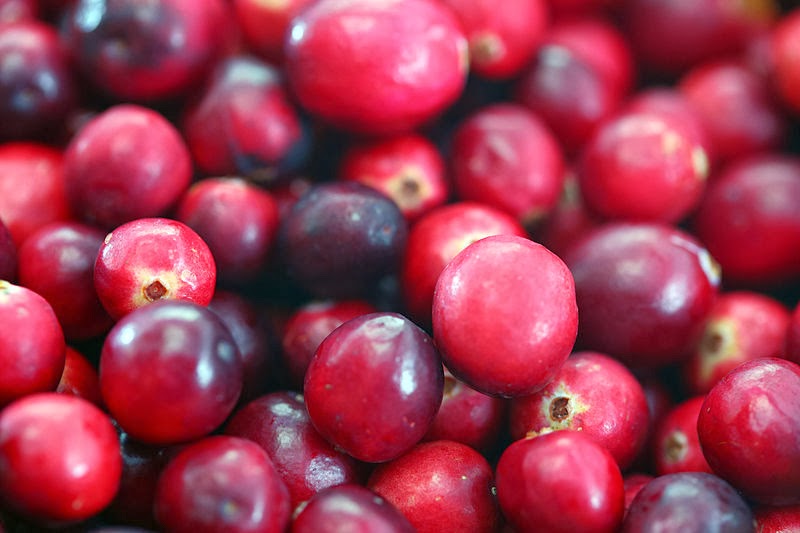
I've been eating lots of cranberries lately. It's the season for them, and they are so delicious. They go with everything. Add to this the many stories I've seen on TV this week about the Kennedy family and their love of Cape Cod, sailing, and lighthouses. Naturally, these things have me thinking about Cape Cod lighthouses. But first, the cranberries--

Cape Cod is known for its cranberry bogs. The fruits ripen in autumn and the bogs are flooded to make the ripe berries float. Today, the berries are harvested in a mechanized way, but in the past they were harvested using a hand-held cranberry scoop. Below is a scoop I found on eBay. These often go for big money; they[re lovely antiques. A visit to the Ocean Spray visitor center in Plymouth is fun this time of year, to sample all the cranberry juices and learn how the berries are grown and harvested. I took my kids there in the late 1980s and, if one could get drunk on cranberry juice, they did!


I'll be making cranberry bread next week for Thanksgiving. The recipe I use is an old one, handed down through several generations. But it's not from my family cookbook. A woman (whose name I failed to record) handed it to me in 1995 when I attended a lighthouse festival on Cape Cod. She came by my book table, bought some signed books, and gave me a small loaf of her cranberry bread wrapped in cellophane and tied with a red ribbon. It was so good I asked for the recipe. She wrote it down and told me the recipe was from her great aunt who had lived on several Cape Cod lighthouses, including Nobska Light.

Cape Cod is a place of rich maritime history and lore. This includes the cape's many lighthouses. They're barely ten miles a part and stand on boath sides of the cape--the notorious "Backside" and the inside facing Cape Cod Bay. There are some unique ones, such as the Three Sisters at Nauset, a set of tiny triple light towers that once guided inshore vessels along the "Backside" of Cape Cod. There were twin lighthouses at Chatham years ago too, at the elbow of the cape. One of the twins was moved to Nauset in the 1920s and then moved again father inland in the 1990s when the cliff eroded away. There are smaller sentinels at the north end where the cape curves northwest like a beckoning finger and becomes a thin strand of tawny, fine sand. Highland Light at Truro is grand and lofty and storied. It has also been moved back from the eroded cliffs. Monomy Light--spidery legged and rusty--sits at the southern tip of the long spit that extends south from the cape, marking a great hazard for ships. And there are more...

Henry David Thoreau visited many of these lighthouses on his walk up the cape in the mid-nineteenth century. He spent an evening with the Highland Lighthouse keeper and wrote at length about it in Cape Cod. Lighthouse author and historian Edward Rowe Snow followed in Thoreau's footsteps a century later, visiting those same lighthouses and eventually detailing them in his Lighthouses of New England. Snow went on to write many lighthouse books and take over the role of Flying Santa over the Lighthouses.

Nobska Lighthouse, of cranberry bread fame, stands watch on the southern part of the cape near Woods Hole. I've been there many times, in various seasons, and the view of the lighthouse on its small hill is always stunning. It's a cast-iron tower with a pretty shake shingle keeper's house. I've heard it's the residence for the officer-in-charge of the Woods Hole Coast Guard Station. It's high-end historic housing!

So, I'm thinking of cranberries today and the gift of that wonderful, historic recipe from a family of Cape Cod lightkeepers. Possibly, they harvested the berries themselves, or at the very least a neighbor brought them a gift of berries to thank them for their benevolent service. That was a common practice in coastal areas, as common as barter: "Keep my boat safe when I go to sea, and I'll keep you in eggs or potatoes or sharpen your scissors or mend your fence. I'll even share my cranberries."

The ritual of making an old, treasured recipe recalls the past in a very sensory and sentimental way. I love such traditions. Perhaps you do too. If so, dig your hands into some flour and sugar and shortening, toss in an egg and some cranberries, and exhume a piece of lighthouse history.


Nobska Lighthouse Cranberry Bread

2 and a 1/4 cups of flour
3/4 cup of sugar
1 tsp. baking soda
1 egg
3/4 cup of whole milk
1 T of lard or other shortening
1 cup cranberries, cook in a little water to soften and make a gel
1 cup chopped nuts of your choice

Combine dry ingredients and set aside. Combine egg, milk, and lard and beat well. Work in flour a little at a time, then add cooled cranberries and walnuts. Mixture will be thick. Don't overwork it. Grease and flour two loaf pans and divide dough mixture between them. Bake at 350 degrees for about an hour, inserting a knife to check for doneness. Cool for ten minutes, then turn out onto a plate. When completely cool, sprinkle with sugar and slice.

Elinor's Note: I make this with butter instead of lard. It's hard to find lard, and my doctor would swoon if she thought I was eating it. I certainly consumed plenty of it as child; my mother cooked many things with lard. She kept it in a large metal can. Lard gets a bad rap, due to its saturated fat content, but it really is an excellent shortening. The taste is irreplaceable. Butter has saturated fat too, so I don't really see the difference. Use whatever works for you. Also, sometimes I substitute a cup of whole berry cranberry sauce from a can, and it works if I add an extra tablespoon or two of flour. It makes the bread a pretty pink color. My favorite nuts for this recipe are walnuts. Happy baking!

(Photo below of Nobska Lighthouse can be found in Wikimedia Commons.)

Wednesday, November 20, 2013

Lighthouse Java


Like most writers, I drink a lot of coffee. I’m drinking it now. I write a few lines, I take a sip of coffee, write a little more, sip a little more. Every half hour or so, I trek from my office to the kitchen microwave to warm up my java or to refill it. Throughout the morning, I probably consume three to four cups of coffee. It fuels my brain, keeps my fingers tapping on the keyboard, and it stains my notes and sometimes my books--a not-so-unpleasant connection between me and my fellow scribes.

It’s a habit, of course, bad in some ways; yet, it tastes so delicious and smells so good, the cup warming my hands. I could have worse habits. I could fatten up my morning libation with too much sugar and cream or add Jack Daniels to it. (A 98 year old woman I used to care for in a nursing home did that, and look how long she lived!)  I could visit Starbucks every day and drop $30 a week on lattes and corporate wealth. I don’t. Most of the coffee I drink comes from my own kitchen. It fills my house with its robust, rich aroma, and the used-up grounds nourish my houseplants and rosebushes. The ritual each morning of making it provides comfort and constancy. I alternate coffee cups, depending on which one is in the dishwasher, between an oversized mug decorated with roosters and one with lighthouses—emblems of morning and coffee!
 
My coffee habit is hereditary, I think. My parents both were coffee drinkers, especially my father. He’s been gone over twenty years, but even today when I think of him I see that coffee cup in his hand and the brown ring inside it. He once told me that coffee was one of the things that got him through World War II, particularly the winter of 1943-44, which was terribly cold. I was probably five years old when Dad taught me how to set up the percolator with Eight O-Clock coffee grounds in the basket, and set it going—katta-katta-chewg, katta-katta-chewg. I still remember how he liked his coffee, with a splash of evaporated milk and two heaping spoons of sugar. (I use half & half and a no-calorie sweetener.)

Of late I’m hearing good things about java. It’s loaded with beneficial antioxidants, and it defends against diseases like type 2 diabetes, Parkinson’s, and liver cancer. The smell of it and the beep of the coffee-maker can wake me from a dead sleep. The caffeine helps me--I'm not a morning person at all!--perk up, be civil, and be able to think more clearly.

The Huffington Post recently ran an article by Renee Jacques called “Eleven Reasons Why You Should Drink Coffee Every Day.” Several of them surprised me, such as coffee consumption being linked to happiness, intelligence, and lower suicide rates, and the aroma of coffee suggested as a stress reducer. Does that mean I’m happy, intelligent, and not apt to end my own life? Maybe I should have another cup right now!

Michael Koh, writing for thoughtcatalog.com called coffee “The Writer’s Addiction.” He said, tongue-in-cheek, that 110% of writers abuse this “substance.” I think that means all of us do...and then some. Dailyfig.figment.com asks us to fill in the blank: “Water is to life as ______ is to writers.” It goes on to note, quite reassuringly for me at least, that some very famous writers fueled their pens with coffee: Walt Whitman, William Shakespeare, Gustav Flaubert, Charles Dickens, Honore de Balzac, L. Frank Baum, Jonathan Swift, T.S. Eliot, Jean-Paul Sartre, Oliver Wendell Holmes.
And, yes, Virginia Woolf, author of To the Lighthouse. She was a lighthouse fancier and a coffee swiller, just like me. (There’s hope for literary immortality!)
 
 
…all of which reminds me that coffee fueled lighthouse keepers too. The old U.S. Lighthouse Service records list a number of provisions that were provided free to lightkeepers, including coffee. It was almost as important as fuel for the beacon. The coffee pot was kept going 24/7 at lighthouses, a fact I can substantiate, having visited many lighthouses in the 2970s and 80s before automation and been offered a cup by Coast Guard keepers. Lighthouse coffee was always strong, and if you were tough, you drank it black. 

Lighthouse coffee was a remedy for the cold and dampness, it kept the crew alert, it warmed up the occasional visitor or castaway, and drinking it was a shared experience in an otherwise forlorn existence. Gathering around the table to have hot coffee and conversation was a regular activity among lightkeepers; it was balm for their loneliness.

 
To that, I’ll raise my cup of writer’s brew and invite you to enjoy some images of current brands of lighthouse coffee. Advertisers know the value in using a lighthouse to hawk their wares. Lighthouse coffee? It suggests warmth, richness, aroma, safety, and camaraderie.