Wednesday, May 4, 2016

A Little Kid Stuff

We are all fourth graders at heart! Some of us have to dig deeper than others to exhume the child within, but we can do it. It's worth doing. Then, some of us never forgot what it's like to be age 10! Find the kid in you, or share this blog entry with a kid you know.

Lighthouse Kitty's "Kids on the Beam" column ran for about eight years in Lighthouse Digest. It was a fun endeavor that netted me lots of mail and, hopefully, helped some kids learn to love lighthouses. Tim Harrison, publisher, and Kathy Finnegan, editor, recognized the need to reach out to kids. I am thankful for their "bright" decision to let me contribute kids' pages.

Lighthouse Kitty was based on a real cat, a Ragdoll mix of mine named ZsaZsa (1996-2009). She was a gift from my daughter and a true sidekick. She made sure she was always where I was in the house. She loved to sleep on the top of my desk hutch or on the copy machine--a warm spot. I've had many cats over my lifetime, and she was truly one of the best.


Periodically, I'll run some of those old kids' column pages. They're worth an encore. Note that most of the email addresses and websites mentioned are defunct, as is Lighthouse Kitty. (I discontinued the column in November 2007. It was too difficult to teach college courses and keep up with the column too.) Sometimes, information in these old columns may be outdated. But the puzzles and crafts and other activities are still fun. Click on the pages to make them larger. I hope you enjoy these!


Tuesday, April 26, 2016

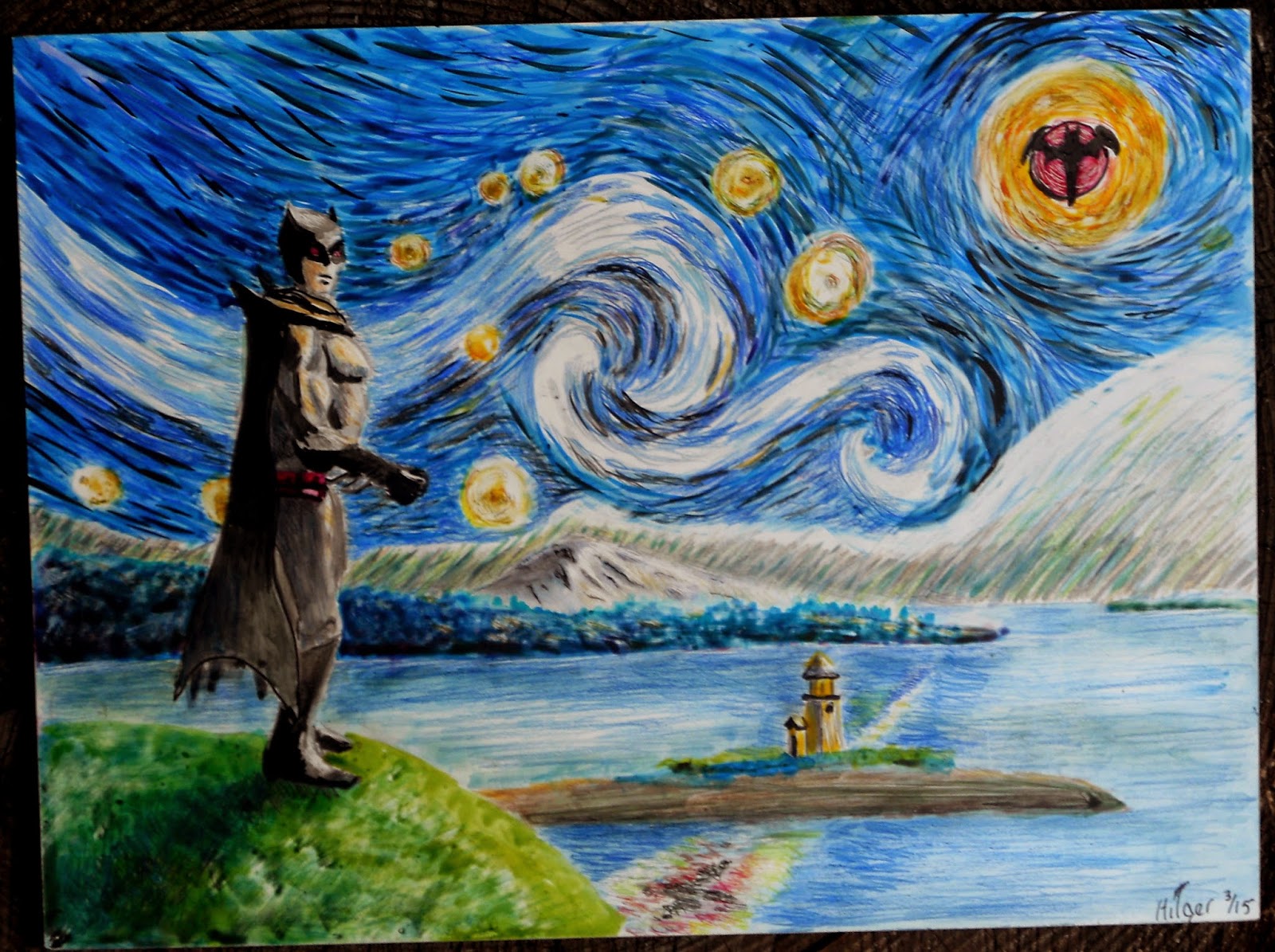
Van Gogh and Lighthouses

I love Vincent Van Gogh's post-impressionist works, especially his "Starry Night," painted in June 1889 as he observed the night sky from his asylum window at Saint-Rémy-de-Provence in southern France. Yes, he was deeply depressed at this time and had already maimed himself by cutting off a small part of his right ear. (Why does this single mad act define him when his art is his genuine identity??!!) But the throes of misery sometimes allow one to observe surroundings more imaginatively and let raw emotions be expressed. Van Gogh loved the night and its vibrant, liquid sky, and he spoke of the stars as being beacons of death: "Just as we take the train to go to Tarascon or Rouen, we take death to go to a star." Van Gogh's "Starry Night" shows Venus and a crescent moon. The original of this painting is now in the collection of the Museum of Modern Art in Manhattan, New York City.


Imagine my surprise and delight to discover that painters who love lighthouses have set them into Van Gogh's lustrous night sky. I've assembled a small collection of them here. They inspire me to do my own rendering! Stand by for that amateur effort. In the meantime, enjoy these. 
Noo Cook painted this one.

Brian Vaughn painted this version. Can you guess the lighthouse? If you think it's Sanibel Lighthouse in Florida, you're right..


Janet Loudon painted Kenosha Light ala Van Gogh.


This is Pat Williams post-impressionistic Bodie Lighthouse.


Thesea McCracken put starfish in her starry night painting. The lighthouse is not identified, though it looks a bit like North Head Lighthouse.


Stephanie Kohler put a generic lighthouse in her starry painting.


Studio G has this "Dark Knight" with starry skies and a lighthouse, posted by Feather.


James Hensman added a Van Goghish sky behind his painting of Twillingsgate Lighthouse.


Here's a rendering by Thomas Powers.


Jim Sharp's "Portland Head" is done in the style of Van Gogh.


I love this one! Dan Sproul captured an icy St. Joseph Pierhead Light with heavy brush strokes and swirling skies. This reminds me of Jim Gills wonderful icy lighthouse photos.


Have you painted a Van Gogh lighthouse? Send me a scan of it! Wouldn't it be fun to organize a Van Gogh Lighthouse show? As always, I welcome your comments, input, and ideas.  (lightkeeper0803@gmail.com)


Thursday, April 21, 2016

Lighthouse Gator

Lighthouse Gator?


Not this kind...

Not this kind either!


This kind!


**********************************************************************************


Let me introduce you to Joe the lighthouse alligator! The Stone family found the big gator stranded in a pit near Cape Canaveral Lighthouse in the early 1930s. Fred Stone, son of Keeper Stone, recalled that the kids quickly became smitten with the handsome reptile and named him Joe. The kids’ mother allowed them to toss leftovers into the pit, and Joe managed to survive. In fact, he grew rather fat and developed a taste for Mrs. Stone’s finer creations, such as strawberry pie.


When Fred’s father received word he was to be transferred down to Hillsboro Inlet Light (pictured above courtesy of the Coast Guard), he announced that Joe would have to stay behind. Outcry from the kids must have been loud...very loud. Keeper Stone relented and told them he would allow Joe to go to Hillsboro if they could find a way to safely get the gator out of his pit. My book, The Lightkeepers' Menagerie, details of the antics involved in Joe’s extraction from the swampy abyss. Here, I’ll simply say the kids subdued Joe with plenty of food, flipped him on his back, and with lots of brawn and determination pulled him from the pit and got him onto the roof of the family car. Tied down and sated with Mrs. Stone’s good cooking, Joe was content to ride to Hillsboro.

It’s hard to imagine how that little caravan of traveling lightkeepers must have looked driving down Route 1, all their belongings in a wagon behind them and an alligator on the roof. “Keep your fingers inside, kids!” Mrs. Stone probably warned. It’s doubtful any hitchhikers flagged them down, and the local police probably were too astonished to give them a traffic ticket for hauling a gator.


Once at Hillsboro Lighthouse, Joe was placed in a fenced-in, cement pool and sand pit made especially for him. Word of his amazing transfer quickly spread, and tourists soon began coming to the station. They were charmed by the tall iron pile lighthouse, but they were more curious to see Joe. The Stones kept marshmallows on hand to feed the contented critter. He lived to a ripe old age and spent his sunset years at Gatorland.
 
(Photo of Joe courtesy of the Stone Family)
 
Yes, it's a true story. I couldn't make up stuff like this! Read more stories about animals at lighthouses in my book. Click on the link above. I guarantee you'll be de"light"ed with its furry, feathered, finned, scaly, slithery, crawlie tales!
 
Join me in Kennebunk, Maine on May 15 for a fun and entertaining presentation about animals that lived at lighthouses. I'm the featured speaker at the annual lighthouse gala for the American Lighthouse Foundation. Click here for more info.


Wednesday, April 13, 2016

A Keeper's Daughter Remembers...


I met Ila Albee Lee in 2004 and interviewed her for my archives and for the Keepers of Point Robinson. (The photo I snapped of her above was at a Point Robinson's Christmas open house in 2004.)

Mrs. Lee provided me with some wonderful images of life at lighthouses in the 1930s-1940s. Her father, Wyman Albee, was a lightkeeper at a number of lighthouses, including Cape Arago, Turn Point, Yaquina Head, Umpqua , and Point Robinson. Mrs. Lee, born in 1930, captured her memories of lighthouse life as a child in  Children of the Lighthouse, www.1stbooks.com.

Here are some images she shared with me--

Wyman Albee in Seattle in the late 1940s, after he ended his lightkeeping career and went to work for the Coast Guard as a mechanic. Mrs. Lee remembered how handsome her father was!
 
Mrs. Lee's mother, sister, and baby brother are pictured at Point Robinson Lighthouse. The family dog, Touser, is in the lower left of the image. Mrs. Lee had many pleasant memories of life at this lighthouse. There was a fort up in the woods, near the orchard, and a chicken coop up there as well.  The families dug for geoducks, and Mrs. Pedersen, the assistant keeper's wife, fried the geoduck steaks in butter. Photo circa 1940.
The Principal Keeper, Wyman Albee (far left holding a stovepipe) took a break form his work to pose with his assistant keeper next to him, Jens Pedersen, the wives, and the kids at Turn Point Lighthouse in the mid-1930s. Ila Albee is third from the right. Turn Point had a spacious duplex for the two families and wonderful places for the kids to play. The kids had a pet raccoon too!

The Albees lived at Cape Arago Lighthouse in the early 1930s. (Mrs. Lee spelled it Argo, due to the way it was pronounced by the keepers, who omitted the "a" or "uh" sound in the middle of the name.) Trix was the family dog at the time. Mrs. Lee noted that the family's dining room table was where all four Albee children were delivered by the attending physician. There was a footbridge connecting the lighthouse and island to the mainland. Mrs. Lee recalled that her sister Lavinia, fell from the footbridge, but her mother caught the child by the hem of her dress and was able to pull her back up to the bridge. Otherwise, she would likely have been killed on the rocks below!
The Albees lived here in the late 1930s. The kids enjoyed agate hunting and shooting agates from a slingshot. Mrs. Lee remembered the boys getting into trouble with the adults because they used their slingshots to shoot seagulls. The kids came down with measles at Yaquina Head and were in bed for a couple of weeks. During this time a fierce late autumn storm blew in and churned up the sea. Mrs. Lee recalled looking out the window in her bedroom and seeing huge balls of sea foam floating and flying.

Ila Albee Lee wrote a poem about lighthouse keeping when she was in her later years. I love it, as it captures the feelings of many people who grew up at lighthouses in the bygone days when families were in residence and human hands tended the lights--

 
Where's the Old Keeper
 
 
The bustling breeze has ceased for a rest,
The billowing sea stops the heave of her breast;
White clouds unfurl like sails late at night,
But where's the old keeper who looks after the light?
 
 
A gull is at rest on the lighthouse tower,
A ship floats along like a drifting flower.
The fish are swimming around for a bite,
But where's the old keeper who looks after the light?
 
 
The sun sinks low, the night draws near,
The voice of the keeper we cannot hear.
A flag is fluttering on the mast half-height,
But where's the old keeper who looks after the light?
 
The sun has set in the golden West,
The honest keeper has done his best,
Stars are twinkling and shining bright;
But where's the old keeper who looks after the light?

Mrs. Ila Albee Lee was 74 in this photo. I interviewed her at her home on Bainbridge Island, WA. Notice her lighthouse blanket! It was November, and her house was damp. To my knowledge she is still living in the same house today. She would be 86 now.


Friday, April 8, 2016

A Lighthouse Tale from 1953

The following pages are from the March 1953 issue of Beware Terror Tales. They are reprinted with appreciation and thanks for the blog of Mr. Karswell www.thehorrorsofitall.blogspot.com.

Sci-fi was big in the 1950s. I still enjoy watching b&w sci-fi films and reading sci-fi stories in magazines and comic books. This was the cold war era, and many of the monsters and aliens in the stories were metaphors for the Soviet Union and communism.

History has its share of sea monster sightings at lighthouses. Who else, besides sailors out at sea and lighthouse keepers, would have a ringside seat for viewing the horrors lurking in the deep? Perhaps those same horrors were created in their imaginations.

Thankfully, there's no Eastham Lighthouse, grisly old lighthouse keeper, or multi-tentacled purple monster like the one in this tale! At least I think not... I'll warn you there's no happy ending to this story. I suppose you could write your own ending. I vote for a satisfying wrap-up with the Coast Guard coming out to the lighthouse to do maintenance, encountering that big-eyed monster, and bonking the daylights out of him with a buoy crane. How would you end this tale?

 (Click on the images to enlarge them.)


Wednesday, April 6, 2016

What the Keepers Wrote

Keeper's logbooks were found at every lighthouse, worldwide. They were intended to preserve a record of activities at each lighthouse. Keepers wrote about weather, work underway or completed at their lighthouse, the arrival and departure of staff and visitors, the kinds and number of passing vessels, any rescues they did, and any problems that occurred.

Some keepers were terse in their entries, while others were verbose. A logbook might contain, for example, observations of the sky, such as an extraordinary sunset or the appearance of a comet. Keepers might mention visiting wildlife or a list of birds seen. Some added poetry to their logbooks, or wrote poems themselves. But mostly, they wrote simple entries.

The following entries are from the logbook of the Destruction Island Lighthouse, Washington in 1898. This logbook is typical--just the basics are written.

But I find the entries interesting. Destruction Island lies about three miles west of the outer coast of Washington, just off Kalaloch. It was a tough assignment, due to the extreme wet and windy weather and the island's remoteness.
Photo circa 1955. U.S. Coast Guard
Christian Zauner was head keeper in 1893. He had three assistants, due to the size of the station and the amount of work to be done. It's likely Zauner wrote the following entries in the log, but possibly his first assistant, Mark Grayson, also made entries. Their penmanship, though unappreciated here, was lovely. I hope you enjoy these entries and get a sense of what July was like on a Washington Coast lighthouse. A lot of painting got done in July!

The brackets [   ] indicate where words were undecipherable, due to ink smudges, faded pages, or too-florid handwriting.

Coast Guard Archives image from about 1965


Keeper’s Log


Destruction Island


1893


July 1      Fresh North wind and clear to 11 p.m.  Fog set in at 11 p.m.  Mending coal sacks.  Finished whitewashing Chicken House, doing Routine in Tower, drying coal sacks, one Steamer bound South.


July 2      Sunday today.  Fog cleared 4 a.m. Light North wind and clear.  Doing routine work.  One Steamer bound North.


July 3      Calm and [      ] from 1 a.m. to 7 a.m. Light North wind and clear.   [      ] and cleaned boiler.  Replaced old ropes on Smoke stack [     ] and safety valve lifts.  One schooner and one steamer in sight.


July 4      Light North [east?] wind and clear.  Only doing the Routine work this day.  Nothing in sight.


July 5      Light North-[East] wind.  Part of day clear, part cloudy.  Trimming down the grass around tower, dwellings and walks.


July 6      Light North-[East] wind.  White washing rooms in Keepers dwelling, doing Routine work, washed Plate glass.


July 7      Calm and Clear to 1 p.m. Cloudy and sultry balance of day, three steamers in sight, Indians out in canoe chasing whales.  Whitewashing rooms in Dwelling downstairs.  Doing Routine work.  Bar: falling 29 – 98 P.M.


July 8      Moderate S.W. wind and rainfall to 9 a.m.  Cloudy balance of day.  Sawing wood, cleaning up in lantern.  Nothing in sight.        


July 9      Sunday, Light S.E. wind and showery to 3 a.m.  [     ] to North and clear.  Washed plate glass in lantern.  W.S. Coast-defense Monitor Monterey passed this Station bound south at 12:30 p.m.


July 10    Moderate North wind and clear.  All hands at work painting inside of Lantern.  Three steamers in sight.


July 11    Light N.W. wind, Cloudy A.M., clear at P.M. Painting inside of Lantern. Two steamers in sight.  Indians caught whale.


July 12    Light N. W. wind and misty to sunrise.  Fresh breeze from the North.  Painting in Lantern.  Lots of Indians here with whale.


July 13    Moderate N.W. wind and misty to 8 a.m.  Clear and fresh breeze after 8 a.m. Painting in Lantern.  Nothing in sight.


July 14    Light North wind and clear.  Washed plate glass, painting inside of Lantern, one steamer bound North a.m.  U.S.L.H. Tender Manzanita arrived at this Station this P.M.   Lt. Blish   U. S. N. Inspector landed and inspected Station.  Received annual supplies.  [    ] and Family returned.  


{Log signed by John B.  Blish,  Lt. U.S.N.  Asst. insp.  15 July 1893}


July 15    Changed Local or [Sun?] time to Standard time by order of Lt. Blish Asst. Inspector.  Light S.E. wind and cloudy.  Received balance of supplies from Tender this a.m.  Commenced to rain 2 p.m.


July 16    Sunday.  Strong S.E. wind and rainfall, doing routine work.  Thick rain squalls.  Signal in operation when necessary.  One Barkentine close in [    ]   [East?] of island trying to  [    ] South.


July 17    Thick and damp fog continues to 10 a.m.  Signal [in operation?] after 10 a.m. Light N.W. wind, low drifting clouds.


July 18    Fresh North breeze and clear. 


NOAA photo

Check out the image above. Can you imagine living on this smear of ragged rocks? There was a table of grass on top and soil for a garden and flowers. Lightkeepers had livestock here--chickens, cows, and pets.

The image below shows what Destruction Island looked like a few years ago.  It's first-order flashing lens was removed about 1998 and was given on loan to the Westport Maritime Museum where it is nicely displayed. The light was turned off and the foghorn was discontinued a few years after the lens was removed.

The light station has been relinquished to U.S. Fish & Wildlife. The island is part of their marine sanctuary on the Washington Coast. Unfortunately, F&W has done nothing to preserve the lighthouse or any of its buildings. All manmade structures are slowly deteriorating. I have asked to visit the island several times but have been denied. I feel it is important to document what is left of the light station. I have serious misgivings about the future of this historic lighthouse. It would be a boon if a nonprofit group would form and devote its energies to helping F&W save this lighthouse.
Here's an aerial image of Destruction Island I took in 2006. You can see a few buildings and the helo-pad used by the Coast Guard in the days when the light and foghorn were active. You can also appreciate why the island is called Destruction--very dangerous rocks, plus it an obstacle along the north-south shipping lane. The name was actually given by the Spanish who landed here for provisions and water and sent a small boat ashore for that purpose. The crewmen in the small boat were all killed by the local Salish people.


The photo below is courtesy of Kraig Anderson of Lighthouse Friends.


Tuesday, March 29, 2016

The Trials of Great Point Lighthouse

On this date in 1984, the old Great Point Lighthouse, completed and lighted in 1818, was knocked down in a fierce spring storm. The 60-foot tall rubble-stone tower had stood for 166 years.


The first lighthouse on Great Point was a wooden tower built in 1784. The point, then called Sandy Point, projected far into the sea on the northeastern side of Nantucket, marking the waters between Nantucket and Monomoy Point (on the Cape Cod mainland). The original light tower was illuminated with whale oil lamps in October 1784 and was dubbed Nantucket Light. Captain Paul Pinkham, a seasoned sailor, was the first lightkeeper. He had to commute 14 miles roundtrip every day to tend the lighthouse, since there were no quarters at the site. There were few lighthouses in America at this time, and other than Boston Light, this lighthouse likely was the most important one in New England. The whaling industry was in its heyday, and ships headed into ports like New Bedford and Nantucket itself had to pass Great Point.


A keeper's house was built in the early 1800s, but in 1812 it burned down. The lightkeeper, Jonathan Coffin, resumed the old and tiresome routine of commuting across the sands from his home to the lighthouse. In 1816, the lighthouse itself burned down. Most citizens suspected arson, but it was never proven.

The residence for the keeper was quickly rebuilt and a temporary light on a post was displayed until 1818 when a new rubble-stone tower was built. The same lamps were installed in the new tower, but this time using a reflector system designed by Winslow Lewis of Cape Cod. In 1857 the tower was given a new third-order Fresnel lens. At this time, the tower also was fortified with a brick lining and the old wooden stairs were replaced by iron stairs.

 
The lighthouse continued its work dutifully, but when lightships were anchored at Cross Rip and Handkerchief Shoals, ships sometimes mistook the Great Point Light for one of the lightships. This eventually was rectified by changing the signature of the Great Point Light with a red sector, but not before several shipwrecks occurred, including the Leesburg and the Storm Castle
 
Great Point Lighthouse was a beloved landmark on Nantucket. In 1920, Everett Fitch wrote a poem about it after he left the sea trades and retired ashore:
 
Good-bye, old friend, old friend, good-bye.
For me you held the light up high.
Through all the years I sailed the sea,
But now you are no more to be.
Alas! I miss thy kindly beam
That from your tower did nightly stream,
And can but heave a heavy sigh.
Good-bye, old friend, old friend, good-bye.
 
The lighthouse was automated in 1950 and its ancillary buildings were razed, including the house after its was set fire by vandals. The tower stood alone on the point, working well. In 1971, the beautiful Fresnel lens was removed and placed on display at Nantucket Lifesaving Museum. The tower then exhibited a 190mm modern beacon.
 
Photo by Kraig Anderson
 
But the point slowly eroded and repeated storms began to undermine the light tower. On March 29, 1984, hurricane force winds tore out the foundation of the light tower and it collapsed. The point was breached by the storm as well, leaving the tip where the lighthouse had stood an island.
 
 
The lighthouse community expressed sadness at the loss of the lighthouse and then outrage when the Coast Guard announced that a skeleton tower would replace the old stone tower that had saved so many lives and served steadfastly for 166 years. Fortunately, Senator Edward Kennedy was able to secure $2 million in federal funding to rebuild the lighthouse using many of the old stones that lay on the beach as exterior facing on a reinforced concrete tower. Like the fabled Phoenix, the new tower rose and was lighted on September 6, 1986. Senator Kennedy was on hand to dedicate the new tower and baptize it with champagne.
 
It continues to shine brightly, carrying on a long American tradition of making the seas safe for mariners.


Photo by Kraig Anderson


All images from the author's collection or the U.S. Coast Guard Archives, except where otherwise noted.